
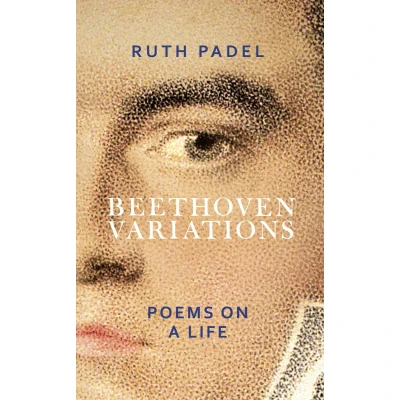
Beethoven Variations
Uitgelicht

|
12,06 |
Naar shop
|

|
12,06 |
Naar shop
|

|
12,06 |
Naar shop
|
 Beschrijving
Bol Partner
Padels imagery and imagination took me deeper into Beethoven than many biographies Ive read. Anthony Tommasini, The New York TimesA fascinating poetic journey into the mind and heart of a musical genius, from the author of the celebrated Darwin: A Life in PoemsRuth Padel's new sequence of poems, in four movements, is a personal voyage through the life and legend of one of the world's greatest composers. She uncovers the man behind the music, charting his private thoughts and feelings through letters, diaries, sketchbooks, and the conversation books he used as his hearing declined. She gives us Beethoven as a battered four-year-old, weeping at the clavier; the young virtuoso pianist agonized by his encroaching deafness; the passionate, heartbroken lover; the clumsy eccentric making coffee with exactly sixty beans. Padel's quest takes her into the heart of Europe and back to her own musical childhood: Her great-grandfather, who studied in Leipzig with a pupil of Beethoven's, became a concert pianist before migrating to Britain; her parents met making music; and Padel grew up playing the viola, Beethoven's instrument as a child. Her book is a poet and string player's intimate connection across the centuries with an artist who, though increasingly isolated, ended even his most harrowing works on a note of hope.


 Beschrijving
(2)
Beschrijving
(2)
Padels imagery and imagination took me deeper into Beethoven than many biographies Ive read. Anthony Tommasini, The New York TimesA fascinating poetic journey into the mind and heart of a musical genius, from the author of the celebrated Darwin: A Life in PoemsRuth Padel's new sequence of poems, in four movements, is a personal voyage through the life and legend of one of the world's greatest composers. She uncovers the man behind the music, charting his private thoughts and feelings through letters, diaries, sketchbooks, and the conversation books he used as his hearing declined. She gives us Beethoven as a battered four-year-old, weeping at the clavier; the young virtuoso pianist agonized by his encroaching deafness; the passionate, heartbroken lover; the clumsy eccentric making coffee with exactly sixty beans. Padel's quest takes her into the heart of Europe and back to her own musical childhood: Her great-grandfather, who studied in Leipzig with a pupil of Beethoven's, became a concert pianist before migrating to Britain; her parents met making music; and Padel grew up playing the viola, Beethoven's instrument as a child. Her book is a poet and string player's intimate connection across the centuries with an artist who, though increasingly isolated, ended even his most harrowing works on a note of hope.
BolFrom the author of the bestselling Darwin: A Life in Poems, Ruth Padel’s new collection follows in the footsteps of one of the world’s greatest composers, Beethoven, and investigates what his life and music might mean to us todayTwo hundred and fifty years since Beethoven was born, Ruth Padel goes on a personal search for him, retracing his steps through war-torn Europe of the early nineteenth century, delving into his music, letters, diaries and the conversation books he used when deaf, to uncover the man behind the legend. Her quest, exploring the life of one of the most creative artists who ever lived, turns more personal than she expects, taking her into the sources of her own creativity and musicality. From a deeply musical family herself, Padel’s parents met through music, and she grew up playing chamber music on viola – Beethoven’s instrument as a child. Her father’s grandfather, a concert pianist born on the German–Danish border, studied in Leipzig with a friend of Beethoven before immigrating to the UK. The poems in this illuminating biography in verse conjure not only Beethoven’s life and personality, but her own music-making and love both of the European music-making tradition to which her father’s family belongs, and to the continent itself Europe.
 Productspecificaties
Prijzen voor het laatst bijgewerkt op:
 Gerelateerde producten


