


€ 105,00 Gratis verzending

Uitgelicht
|
|
105,00 |
Naar shop
|

|
115,00 |
Naar shop
|
| VERGELIJK ALLE AANBIEDERS (2) | ||
 Beschrijving
Vergelijk aanbieders (2)
€ 105,00 Gratis verzending
€ 115,00 Gratis verzending
Winkels met andere maten
Beschrijving
(1)
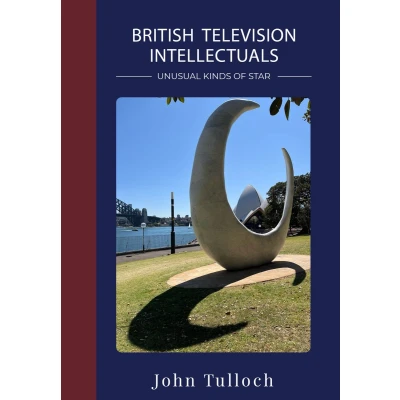
The first exploration of the rise of one of Britain's least-recognised but most significant television genres. Working within the frame of public intellectual theory, it tells the story and analyses the means by which 'unusual kinds of star' became Britain's TV intellectuals and have developed as a genre for over 65 years. 1 b&W illus. A pioneering exploration of one of Britain’s most significant yet often overlooked television phenomena, this book traces the rise and development of the TV intellectual as a distinct presence over the past sixty-five years. Situated within the framework of public intellectual theory, it explores several of Britain’s most notable and influential cultural figures, revealing how these unusual kinds of stars have combined creativity and intellect to engage wide international audiences. ‘John Tulloch has produced a personal and passionate vision of British television intellectuals as professionals engaged in media as a force for change. He illuminates the historical power in the telling of stories and the translation of knowledge for public good. Moreover, Tulloch is a formidable champion of both the historians and the medium of television in rooting out civilisation and all its discontents. A truly unique book.’ Professor Andrew Hoskins, University of Edinburgh, UK. ‘An engaging and scholarly look at the different ways British TV has sought to offer serious and challenging programmes over the last 60 years. Anyone who believes broadcasting has a role in education and public ideas – or has simply enjoyed high quality series – will relish this history.’ Professor Richard Sambrook, School of Journalism, Media and Culture, Cardiff University, UK. John Tulloch is emeritus professor with a distinguished career spanning over fifty years across universities in Australia and Britain. He has published and co-published more than twenty books internationally. This book explores for the first time the rise of one of Britain's least-recognised but most significant television genres. Working within the frame of public intellectual theory, it tells the story and analyses the means by which 'unusual kinds of star' became Britain's TV intellectuals and have developed as a genre for over 65 years. Names included here are AJP Taylor, Kenneth Clark, Jacob Bronowski,, Jonathan Miller, Simon Schama, Marcus du Sautoy, Niall Ferguson, Mary Beard, Alice Roberts, Pam Cox, Brian Cox, David Olusoga, Janina Ramirez and Alastair Sooke, all of whom have starred in their different ways, combining within their productions an outstanding combination of television creativity and intellect for a huge international audience. Built deeply into the assumptions of these television intellectuals have been understandings about civilisation itself, veering from Kenneth Clark's fear for its survival in his 1969 BBC series Civilisation, to the fear of it (in the form of colonialism) in the reworking of Clark's concept, now called Civilisations (2018) by the BBC and Civilizations by PBS in the USA. Finally, in its Coda the book explores in the era of climate change continuing BBC/PBS assumptions about 'civilisation' by way of First Nations 'deep-history'.
 Prijshistorie
 * Prijshistorie bevat geen data van Amazon.
Prijzen voor het laatst bijgewerkt op:
 Gerelateerde resultaten
 Productspecificaties


