
How to Read a Shakespeare Play
Uitgelicht

|
99,99 |
Naar shop
|
 Beschrijving
Bol
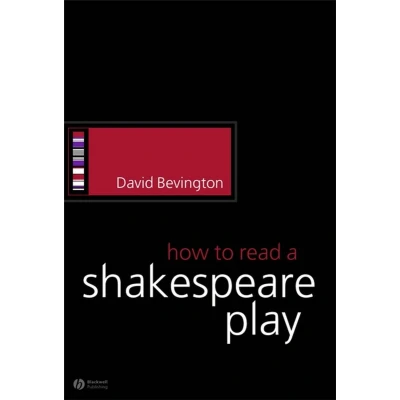
This clear and succinct book is designed for general readers who want to know how to go about reading Shakespeare's works for pleasure. How should we read Shakespeare plays? In this clear and succinct book author David Bevington, who has extensive experience of teaching Shakespeare to students, encourages readers to approach his works aggressively, interactively, and questioningly. Bevington suggests that readers think of themselves as armchair directors, deciding what the actors should wear, what social class they represent, why they are there, and, most importantly, what they are after. Bevington’s introduction incorporates fresh and incisive readings of a handful of popular Shakespeare plays: A Midsummer Night’s Dream, Romeo and Juliet, Henry IV Part I, Hamlet, King Lear and The Tempest. Using these plays as examples, he demonstrates how Shakespeare worked his way forward by genres, focusing at first on romantic comedies and English history plays, and taking on the daunting assignment of writing tragedies only when he felt he was ready. This clear and succinct book is designed for general readers who want to know how to go about reading Shakespeare’s works for pleasure. Encourages readers to approach Shakespeare's works aggressively, interactively, and questioningly Focuses on six popular Shakespeare plays - A Midsummer Night’s Dream, Romeo and Juliet, Henry IV Part I, Hamlet, King Lear and The Tempest Recommends the best editions, recordings and DVDs / videos of these plays Discusses the production of the plays on stage and screen Introduces readers to different genres in Shakespeare – romantic comedy, English history, tragedy and romance Avoids jargon and abstract literary theory


Vergelijk aanbieders (1)

 Beschrijving
(1)
Beschrijving
(1)
This clear and succinct book is designed for general readers who want to know how to go about reading Shakespeare's works for pleasure. How should we read Shakespeare plays? In this clear and succinct book author David Bevington, who has extensive experience of teaching Shakespeare to students, encourages readers to approach his works aggressively, interactively, and questioningly. Bevington suggests that readers think of themselves as armchair directors, deciding what the actors should wear, what social class they represent, why they are there, and, most importantly, what they are after. Bevington’s introduction incorporates fresh and incisive readings of a handful of popular Shakespeare plays: A Midsummer Night’s Dream, Romeo and Juliet, Henry IV Part I, Hamlet, King Lear and The Tempest. Using these plays as examples, he demonstrates how Shakespeare worked his way forward by genres, focusing at first on romantic comedies and English history plays, and taking on the daunting assignment of writing tragedies only when he felt he was ready. This clear and succinct book is designed for general readers who want to know how to go about reading Shakespeare’s works for pleasure. Encourages readers to approach Shakespeare's works aggressively, interactively, and questioningly Focuses on six popular Shakespeare plays - A Midsummer Night’s Dream, Romeo and Juliet, Henry IV Part I, Hamlet, King Lear and The Tempest Recommends the best editions, recordings and DVDs / videos of these plays Discusses the production of the plays on stage and screen Introduces readers to different genres in Shakespeare – romantic comedy, English history, tragedy and romance Avoids jargon and abstract literary theory
 Productspecificaties
| EAN |
|
|---|---|
| Maat |
|
Prijzen voor het laatst bijgewerkt op:
 Gerelateerde producten


