


gebruikt € 33,98 Gratis verzending

Uitgelicht
|
|
33,98 |
Naar shop
|
| VERGELIJK ALLE AANBIEDERS (1) | ||
 Beschrijving
Vergelijk aanbieders (1)
gebruikt € 33,98 Gratis verzending
Winkels met andere maten
Beschrijving
(1)
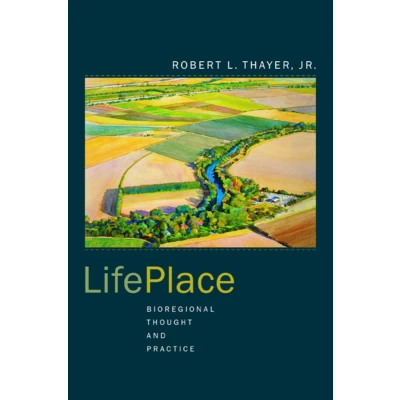
Aims to present a provocative meditation on bioregionalism and what it means to live, work, eat and play in relation to naturally defined areas. This work gives a textured portrait of the author's own home, the Putah-Cache watershed in California's Sacramento Valley, demonstrating how bioregionalism can be practiced in everyday life. "A superb blend of thoughtful analysis and delightfully readable prose, LifePlace is both a major contribution to bioregional literature and an excellent guide to sustainable practice."—Daniel Kemmis, author of This Sovereign Land: A New Vision for Governing the West " LifePlace offers an inspired approach for creating an alternative, more secure future than presently faces us. Thayer's arguments are convincing; his optimism and sense of wonder are contagious. As we finish the book, we are changed by it, and its influence lingers like a time-release capsule. LifePlace is a profound contribution to landscape architecture literature and beyond."—Joan Woodward, author of Waterstained Landscapes: Seeing and Shaping Regionally Distinctive Places Robert Thayer brings the concepts and promises of the growing bioregional movement to a wide audience in a book that passionately urges us to discover 'where we are' as an antidote to our rootless, stressful modern lives. "LifePlace" is a provocative meditation on bioregionalism and what it means to live, work, eat, and play in relation to naturally, rather than politically, defined areas. In it, Thayer gives a richly textured portrait of his own home, the Putah-Cache watershed in California's Sacramento Valley, demonstrating how bioregionalism can be practiced in everyday life. Written in a lively anecdotal style and expressing a profound love of place, this book is a guide to the personal rewards and the social benefits of reinhabiting the natural world on a local scale. In "LifePlace", Thayer shares what he has learned over the course of thirty years about the Sacramento Valley's geography, minerals, flora, and fauna; its relation to fire, agriculture, and water; and its indigenous people, farmers, and artists. He shows how the spirit of bioregionalism springs from learning the history of a place, from participating in its local economy, from living in housing designed in the context of the region. He asks: How can we instill a love of place and knowledge of the local into our education system? How can the economy become more responsive to the ecology of region? This valuable book is also a window onto current writing on bioregionalism, introducing the ideas of its most notable proponents in accessible and highly engaging prose. At the same time that it gives an entirely new appreciation of California's Central Valley, "LifePlace" shows how we can move toward a new way of being, thinking, and acting in the world that can lead to a sustainable, harmonious, and more satisfying future.
 Productspecificaties
| EAN |
|
|---|---|
| Maat |
|
 Gerelateerde resultaten


