
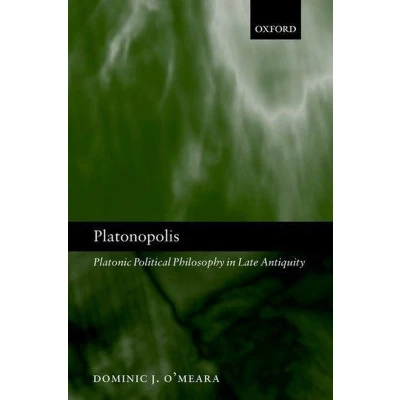
Platonopolis
Uitgelicht

|
63,99 |
Naar shop
|

|
74,34 |
Naar shop
|
 Beschrijving
Bol
Discusses topics such as: philosopher-kings and queens; political goals and levels of reform: law, constitutions, justice, and penology; the political function of religion; and the limits of political science and action. The author explores various reactions to the political ideas in the works of Christian and Islamic writers. Conventional wisdom suggests that the Platonist philosophers of Late Antiquity, from Plotinus (third century) to the sixth-century schools in Athens and Alexandria, neglected the political dimension of their Platonic heritage in their concentration on an otherworldly life. Dominic O'Meara presents a revelatory reappraisal of these thinkers, arguing that their otherworldliness involved rather than excluded political ideas, and he proposes for the first time a reconstruction of their political philosophy, their conception of the function, structure, and contents of political science, and its relation to political virtue and to the divinization of soul and state. Among the topics discussed by O'Meara are: philosopher-kings and queens; political goals and levels of reform: law, constitutions, justice, and penology; the political function of religion; and the limits of political science and action. He also explores various reactions to these political ideas in the works of Christian and Islamic writers, in particular Eusebius, Augustine, Pseudo-Dionysius, and al-Farabi. Filling a major gap in our understanding, Platonopolis will be of substantial interest to scholars and students of ancient philosophy, classicists, and historians of political thought.


 Beschrijving
(2)
Beschrijving
(2)
Discusses topics such as: philosopher-kings and queens; political goals and levels of reform: law, constitutions, justice, and penology; the political function of religion; and the limits of political science and action. The author explores various reactions to the political ideas in the works of Christian and Islamic writers. Conventional wisdom suggests that the Platonist philosophers of Late Antiquity, from Plotinus (third century) to the sixth-century schools in Athens and Alexandria, neglected the political dimension of their Platonic heritage in their concentration on an otherworldly life. Dominic O'Meara presents a revelatory reappraisal of these thinkers, arguing that their otherworldliness involved rather than excluded political ideas, and he proposes for the first time a reconstruction of their political philosophy, their conception of the function, structure, and contents of political science, and its relation to political virtue and to the divinization of soul and state. Among the topics discussed by O'Meara are: philosopher-kings and queens; political goals and levels of reform: law, constitutions, justice, and penology; the political function of religion; and the limits of political science and action. He also explores various reactions to these political ideas in the works of Christian and Islamic writers, in particular Eusebius, Augustine, Pseudo-Dionysius, and al-Farabi. Filling a major gap in our understanding, Platonopolis will be of substantial interest to scholars and students of ancient philosophy, classicists, and historians of political thought.
Bol PartnerConventional wisdom suggests that the Platonist philosophers of Late Antiquity neglected the political dimension of their Platonic heritage in their concentration on an otherworldly life. This work presents a reappraisal of these thinkers, arguing that their otherworldliness involved rather than excluded political ideas. Conventional wisdom suggests that the Platonist philosophers of Late Antiquity, from Plotinus (third century) to the sixth-century schools in Athens and Alexandria, neglected the political dimension of their Platonic heritage in their concentration on an otherworldly life. Dominic O'Meara presents a revelatory reappraisal of these thinkers, arguing that their otherworldliness involved rather than excluded political ideas, and he proposes for the first time a reconstruction of their political philosophy, their conception of the function, structure, and contents of political science, and its relation to political virtue and to the divinization of soul and state. Among the topics discussed by O'Meara are: philosopher-kings and queens; political goals and levels of reform: law, constitutions, justice, and penology; the political function of religion; and the limits of political science and action. He also explores various reactions to these political ideas in the works of Christian and Islamic writers, in particular Eusebius, Augustine, Pseudo-Dionysius, and al-Farabi. Filling a major gap in our understanding, Platonopolis will be of substantial interest to scholars and students of ancient philosophy, classicists, and historians of political thought.
 Productspecificaties
| EAN |
|
|---|---|
| Maat |
|
 Prijshistorie
Prijzen voor het laatst bijgewerkt op:
 Gerelateerde producten


