
Seeing Things
Uitgelicht

|
107,30 |
Naar shop
|

|
142,00
132,00 |
Naar shop
|
 Beschrijving
Bol
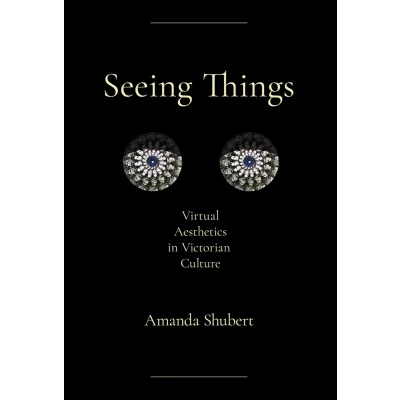
A cultural history of nineteenth-century media imaginaries, Seeing Things tells the story of how Victorians experienced the virtual images created by modern optical technologies – magic lanterns, stereoscopes, phenakistoscopes, museum displays, and illusionistic stage magic. Amanda Shubert argues that interactions with these devices gave rise to a new virtual aesthetics – an understanding of visual and perceptual encounters with things that are not really there. The popularization of Victorian optical media redefined visuality as a rational mode of spectatorship that taught audiences to distinguish illusion from reality. As an aesthetic expression of a civilizational ideal that defined the capacity to see but not believe, to be entertained without being deceived, it became a sign of western supremacy. By tracing the development of virtual aesthetics through nineteenth-century writings, from the novels of George Eliot and Charles Dickens to popular science writing and imperial travelogues, Seeing Things recovers a formative period of technological and literary innovation to explain how optical media not only anticipated cinema but became a paradigmatic media aesthetic of western modernity.


 Beschrijving
(2)
Beschrijving
(2)
A cultural history of nineteenth-century media imaginaries, Seeing Things tells the story of how Victorians experienced the virtual images created by modern optical technologies – magic lanterns, stereoscopes, phenakistoscopes, museum displays, and illusionistic stage magic. Amanda Shubert argues that interactions with these devices gave rise to a new virtual aesthetics – an understanding of visual and perceptual encounters with things that are not really there. The popularization of Victorian optical media redefined visuality as a rational mode of spectatorship that taught audiences to distinguish illusion from reality. As an aesthetic expression of a civilizational ideal that defined the capacity to see but not believe, to be entertained without being deceived, it became a sign of western supremacy. By tracing the development of virtual aesthetics through nineteenth-century writings, from the novels of George Eliot and Charles Dickens to popular science writing and imperial travelogues, Seeing Things recovers a formative period of technological and literary innovation to explain how optical media not only anticipated cinema but became a paradigmatic media aesthetic of western modernity.
AmazonPagina's: 252, Hardcover, Cornell University Press
 Productspecificaties
Prijzen voor het laatst bijgewerkt op:
 Gerelateerde producten


