


€ 26,99 Gratis verzending

Uitgelicht
|
|
26,99 |
Naar shop
|

|
31,63 |
Naar shop
|
| VERGELIJK ALLE AANBIEDERS (2) | ||
 Beschrijving
Vergelijk aanbieders (2)
€ 26,99 Gratis verzending
€ 31,63 Gratis verzending
Winkels met andere maten
Beschrijving
(1)
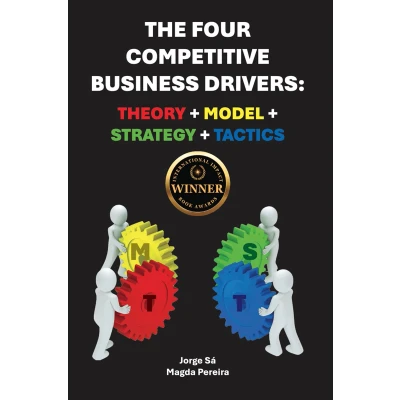
Distinct from typical management guides that separate strategy and tactics, this work emphasizes harmonizing the business model and theory of business. It demonstrates through varied examples how fusing purpose, structure, direction, and execution is vital for sustained organizational achievement. Sometimes management books achieve a clear-cut distinction between strategy and tactics. Seldom they include the business model as a third competitiveness driver. And never so far, has the theory of business been considered as a fourth required performance vector, different from all other three. However, organizational optimization requires all four: the why, where, what and how. The theory of business (Drucker) is the why the company makes sense. The reality assumptions the organization is grounded upon. What it is paid for. The business model (Porter) is the what: the basic pillars of a firm's organization. How it transforms client satisfaction into value for itself. Strategy (Joffre) is the where: the choice of 1) geographical areas; 2) industries; and 3) (within them of) segments. And tactics is the how, respecting to the nine functional areas from marketing (Kotler) to human resources; to how to advertise; how to motivate; etc. Four inferences follow: All four drivers are necessary conditions, none sufficient; They interrelate, some impacting on others; They must fit reinforcing each other; and They should be periodically reviewed (under a sequence of steps). This is illustrated by the book's detailed examples of e.g. Nike, Dollar Shave Club, Spotify, SpaceX, Vendôme, Sears, IBM, Apple Music, McDonald's, Marks & Spencer, Canva, SolarCity, Farfetch, etc. The fundamental message is that neglect of any of the four drivers brings efficiency (doing things right – the Phronesis of Aristotle) at the cost of lower effectiveness (doing the right things – the Chokhmah of Solomon). With more and more resources producing less and less, underperformance will follow.
 Prijshistorie
 * Prijshistorie bevat geen data van Amazon.
Prijzen voor het laatst bijgewerkt op:
 Gerelateerde resultaten
 Productspecificaties


