
Theophrastus
Uitgelicht

|
22,95 |
Naar shop
|

|
24,50 |
Naar shop
|

|
24,50 |
Naar shop
|
 Beschrijving
Bol Partner
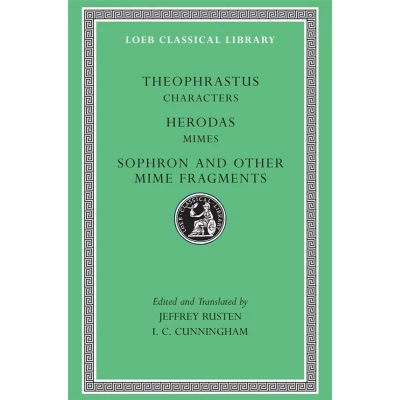
Fictionalized faults are the focus of Characters by Theophrastus. The Hellenistic poet Herodas wrote Mimes, in which everyday life is portrayed and character as opposed to plot depicted. Mimes by Sophron and anonymous mime fragments also represent that genre. Dramatis personae.This volume collects important examples of Greek literary portraiture. The Characters of Theophrastus consists of thirty fictional sketches of men who are each dominated by a single fault, such as arrogance, boorishness, or superstition. Unassuming in style, his character sketches nonetheless bear resemblance to the vivid figures of the period’s New Comedy. The Hellenistic poet Herodas wrote mimes, a popular Greek entertainment in which one actor or a small group portrayed a situation from everyday urban life, concentrating on depiction of character rather than on plot. Here too in a new text and translation are substantial portions of the mimes of Sophron, a Syracusan of the fifth century BC whose work Plato is said to have enjoyed, as well as a selection of anonymous mime fragments. The extant work of Sophron and the anonymous mime fragments are newly added to the Loeb Classical Library in this edition. And Jeffrey Rusten and Ian Cunningham have updated their editions of Theophrastus and Herodas (both first published in 1993) in light of the latest scholarship.


 Beschrijving
(2)
Beschrijving
(2)
Fictionalized faults are the focus of Characters by Theophrastus. The Hellenistic poet Herodas wrote Mimes, in which everyday life is portrayed and character as opposed to plot depicted. Mimes by Sophron and anonymous mime fragments also represent that genre. Dramatis personae.This volume collects important examples of Greek literary portraiture. The Characters of Theophrastus consists of thirty fictional sketches of men who are each dominated by a single fault, such as arrogance, boorishness, or superstition. Unassuming in style, his character sketches nonetheless bear resemblance to the vivid figures of the period’s New Comedy. The Hellenistic poet Herodas wrote mimes, a popular Greek entertainment in which one actor or a small group portrayed a situation from everyday urban life, concentrating on depiction of character rather than on plot. Here too in a new text and translation are substantial portions of the mimes of Sophron, a Syracusan of the fifth century BC whose work Plato is said to have enjoyed, as well as a selection of anonymous mime fragments. The extant work of Sophron and the anonymous mime fragments are newly added to the Loeb Classical Library in this edition. And Jeffrey Rusten and Ian Cunningham have updated their editions of Theophrastus and Herodas (both first published in 1993) in light of the latest scholarship.
AmazonPagina's: 432, Editie: 2 Revised edition, Hardcover, Harvard University Press
 Productspecificaties
Prijzen voor het laatst bijgewerkt op:
 Gerelateerde producten


