
Thomas Jefferson, Time and History
Uitgelicht

|
48,99 |
Naar shop
|
 Beschrijving
Bol
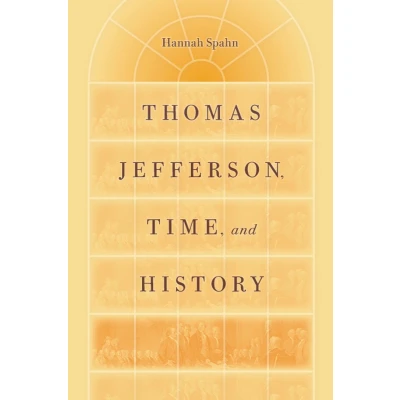
Beginning with the famous opening to the Declaration of Independence ( When in the course of human events... ), almost all of Thomas Jefferson's writings include creative, stylistically and philosophically complex references to time and history. Although best known for his forward-looking statements envisioning future progress, Jefferson was in fact deeply concerned with the problem of coming to terms with the impending loss or fragmentation of the past. As Hannah Spahn shows in Thomas Jefferson, Time, and History, his efforts to promote an exceptionalist interpretation of the United States as the first nation to escape from the crimes and calamities of European history were complicated both by his doubts about the outcome of the American experiment and by his skepticism about the methods and morals of eighteenth-century philosophical history. Spahn approaches the conundrum of Jefferson's Janus-faced, equally forward- and backward-oriented thought by discussing it less as a matter of personal contradiction and paradox than as the expression of a late Newtonian Enlightenment, in a period between ancient and modern modes of explaining change in time. She follows Jefferson in his creation of an influential narrative of American and global history over the course of half a century, opening avenues into a temporal and historical imagination that was different from ours, and offering new assessments of the solutions Jefferson and his generation found (or failed to find) to central moral and political problems like slavery.


Vergelijk aanbieders (1)

 Beschrijving
(1)
Beschrijving
(1)
Beginning with the famous opening to the Declaration of Independence ( When in the course of human events... ), almost all of Thomas Jefferson's writings include creative, stylistically and philosophically complex references to time and history. Although best known for his forward-looking statements envisioning future progress, Jefferson was in fact deeply concerned with the problem of coming to terms with the impending loss or fragmentation of the past. As Hannah Spahn shows in Thomas Jefferson, Time, and History, his efforts to promote an exceptionalist interpretation of the United States as the first nation to escape from the crimes and calamities of European history were complicated both by his doubts about the outcome of the American experiment and by his skepticism about the methods and morals of eighteenth-century philosophical history. Spahn approaches the conundrum of Jefferson's Janus-faced, equally forward- and backward-oriented thought by discussing it less as a matter of personal contradiction and paradox than as the expression of a late Newtonian Enlightenment, in a period between ancient and modern modes of explaining change in time. She follows Jefferson in his creation of an influential narrative of American and global history over the course of half a century, opening avenues into a temporal and historical imagination that was different from ours, and offering new assessments of the solutions Jefferson and his generation found (or failed to find) to central moral and political problems like slavery.
 Productspecificaties
| EAN |
|
|---|---|
| Maat |
|
Prijzen voor het laatst bijgewerkt op:
 Gerelateerde producten


