
3 D Experimental VR and Art Practices
Uitgelicht

|
49,95
39,99 |
Naar shop
|
| VERGELIJK ALLE AANBIEDERS (1) | ||
 Beschrijving
Bol
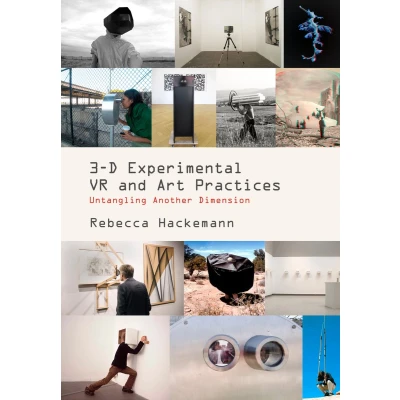
A critical survey of art practices by 25 artists, whose work involves the use of 3-D from 1900 to present. Addresses themes such as networked VR, the stereoscope as a spectacle in art practices ranging from painting to installation art, film, video, virtual reality art and the metaverse. 3-D glasses included with print editions. 89 colour illus. Though we see in three dimensions, we tend to notice 3-D when it is artificially created, as with a stereoscope. Rather than tell the history of 3-D through technique and technology, Rebecca Hackemann brings a conceptual, artistic, and critical view to her topic, unpacking its use in conceptual art, sculpture, and other mediums. Bringing together artists such as Salvador Dali Duchamp, William Kentridge and Lydia Clark who were inspired by three-dimensional imagery and their theories, Hackemann surveys sixty years of 3-D in contemporary art for indicators of a turn in visual culture, foregrounding meaning and content. The book addresses themes such as visual perception, perception of 3-D and stereo. With the event of the stereoscope and the theatre, dioramas and panoramas before it, vision and perception in the eighteenth and nineteenth century is seen to be marketed to a mass audience. As such the spectacle of the stereoscope and other optical devices can be seen as a precursor to mass media dissemination today. Yet artists use the stereoscope and VR to signify the spectacle, clairvoyance, vision and the mechanism of vision as well as a symbol for the act of looking, being looked at while looking and the gaze within an art new media practice. Other artists have used 3-D and virtual reality to address themes such as theories of consciousness or embodied consciousness, the human – machine relationship and the idea of mapping reality, alternative networked realities. The book includes an introduction and summary of chapters, 86 anaglyphic 3-D images and presents a survey of artists working in 3-D and virtual reality, VR art. The convergence of other fields such as new media art, video art and early virtual reality art is described through many examples within the scope of the book. Artists discussed include Mert Akbal, Zoe Beloff , Geoffrey Berliner, Lygia Clark, Dan Graham, Salvador Dali, Marcel Duchamp, Scott S. Fisher, Rebecca Hackemann, Perry Hoberman, Daniel Iglesia, Ken Jacobs, William Kentridge, Susan MacWilliam, Patrick Meagher, Rosa Menkman, Jim Naughten, Tony Ousler, Alfons Schilling, Joel Schlemowitz, Christopher Schneberger, Judith Sönniken, Ethan Turpin, Aga Ousseinov, Colleen Woolpert. 3-D glasses included with hardback book.


Vergelijk aanbieders (1)

 Beschrijving
(1)
Beschrijving
(1)
A critical survey of art practices by 25 artists, whose work involves the use of 3-D from 1900 to present. Addresses themes such as networked VR, the stereoscope as a spectacle in art practices ranging from painting to installation art, film, video, virtual reality art and the metaverse. 3-D glasses included with print editions. 89 colour illus. Though we see in three dimensions, we tend to notice 3-D when it is artificially created, as with a stereoscope. Rather than tell the history of 3-D through technique and technology, Rebecca Hackemann brings a conceptual, artistic, and critical view to her topic, unpacking its use in conceptual art, sculpture, and other mediums. Bringing together artists such as Salvador Dali Duchamp, William Kentridge and Lydia Clark who were inspired by three-dimensional imagery and their theories, Hackemann surveys sixty years of 3-D in contemporary art for indicators of a turn in visual culture, foregrounding meaning and content. The book addresses themes such as visual perception, perception of 3-D and stereo. With the event of the stereoscope and the theatre, dioramas and panoramas before it, vision and perception in the eighteenth and nineteenth century is seen to be marketed to a mass audience. As such the spectacle of the stereoscope and other optical devices can be seen as a precursor to mass media dissemination today. Yet artists use the stereoscope and VR to signify the spectacle, clairvoyance, vision and the mechanism of vision as well as a symbol for the act of looking, being looked at while looking and the gaze within an art new media practice. Other artists have used 3-D and virtual reality to address themes such as theories of consciousness or embodied consciousness, the human – machine relationship and the idea of mapping reality, alternative networked realities. The book includes an introduction and summary of chapters, 86 anaglyphic 3-D images and presents a survey of artists working in 3-D and virtual reality, VR art. The convergence of other fields such as new media art, video art and early virtual reality art is described through many examples within the scope of the book. Artists discussed include Mert Akbal, Zoe Beloff , Geoffrey Berliner, Lygia Clark, Dan Graham, Salvador Dali, Marcel Duchamp, Scott S. Fisher, Rebecca Hackemann, Perry Hoberman, Daniel Iglesia, Ken Jacobs, William Kentridge, Susan MacWilliam, Patrick Meagher, Rosa Menkman, Jim Naughten, Tony Ousler, Alfons Schilling, Joel Schlemowitz, Christopher Schneberger, Judith Sönniken, Ethan Turpin, Aga Ousseinov, Colleen Woolpert. 3-D glasses included with hardback book.
 Productspecificaties
| EAN |
|
|---|---|
| Maat |
|
 Prijshistorie
Prijzen voor het laatst bijgewerkt op:
 Gerelateerde resultaten


