


€ 17,00 € 2,99 verzendkosten Totaal € 19,99

Uitgelicht
|
|
17,00 |
Naar shop
|

|
21,06 |
Naar shop
|

|
21,06 |
Naar shop
|
| VERGELIJK ALLE AANBIEDERS (3) | ||
 Beschrijving
Vergelijk aanbieders (3)
€ 17,00 € 2,99 verzendkosten Totaal € 19,99
€ 21,06 Gratis verzending
€ 21,06 Gratis verzending
Winkels met andere maten
Beschrijving
(1)
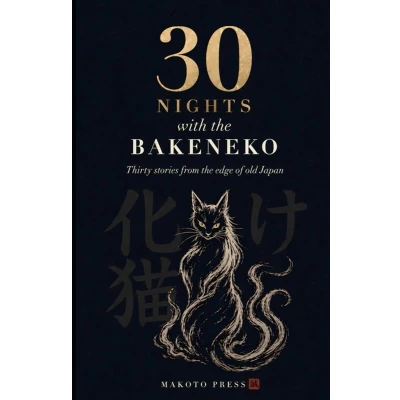
In English, the word bakeneko has been rendered as goblin cat, vampire cat, demon cat, and witch-cat.But the bakeneko is the bakeneko and it is not a creature out of the wilderness. It is the household's own cat. Fed for years, named for years, slept with for years, and then, one night, seen on its hind legs at the oil lamp with its tongue in the dish and a shadow on the paper screen that is the wrong shape. The Edo encyclopedists put the threshold at twelve years, or thirteen, or as many years as the cat has hairs on its back. The household had usually stopped counting.30 Nights with the Bakeneko is thirty literary retellings of Japan's most domestic yōkai, told in the quiet, exact register of Lafcadio Hearn. The book is built as a staircase. It begins in the kitchen: the lamp-licker, the cat that speaks in a small rough voice, the cat that walks upright to the water-bucket and drinks. It passes through the great Nabeshima vendetta, where a cat licks a dead mother's blood and a young retainer stays awake by driving a knife into his own thigh. At the fifteenth night the tail forks, and the cat walks out the back door and up into the mountains, and the book goes with it: to the dancing cats of the graveyard, the kasha that drops out of a clear sky onto a funeral procession, the mountain in Toyama that still bears the creature's name. It comes back down, at the end, to the gate of a poor temple in Setagaya and the cold kitchen of a potter's widow in Asakusa - the two places Japan's lucky cat, the maneki-neko with one paw raised, was born.Here is Hearn in his Matsue garden, being told which kind of kitten not to buy. The farm wife in Nabari whose dead wife came back to lay the morning fire. The herbalist on the Nasu plain who looked back once and counted two tails. The priest of Tsurezuregusa who met the nekomata on a dark road and found it was his own dog. And the old white cat of Mount Kōya, which came to the temple gate one autumn and chose, for the rest of its long life, to do no harm.The stories draw on the deep sources. Teika's Meigetsuki of 1233, the 1712 Wakan Sansai Zue, Negishi Yasumori's Mimibukuro, the Saga kabuki, Kuniyoshi's cat-prints, and on Mitford, Davis, and Hearn, who carried the creature west. Each night closes with a 一語 (ichigo): a single Japanese word from the story, taken apart and explained: its etymology, its register, the way it is actually used. Read in order, the thirty words are a working vocabulary of the tradition.Patient. Domestic. Watching the lamp.One tail. Two tails. The cat has been in the kitchen the whole time.
 Prijshistorie
 * Prijshistorie bevat geen data van Amazon, Amazon Marketplace.
Prijzen voor het laatst bijgewerkt op:
 Gerelateerde resultaten
 Productspecificaties


