


€ 14,00 € 2,99 verzendkosten Totaal € 16,99

Gesponsorde links
|
|
14,00 |
Naar shop
|

|
14,68 |
Naar shop
|

|
14,68 |
Naar shop
|
| VERGELIJK ALLE AANBIEDERS (3) | ||
 Beschrijving
Vergelijk aanbieders (3)
Gesponsorde links · Sommige shops betalen ons een vergoeding
€ 14,00 € 2,99 verzendkosten Totaal € 16,99
€ 14,68 Gratis verzending
€ 14,68 Gratis verzending
Winkels met andere maten
Beschrijving
(1)
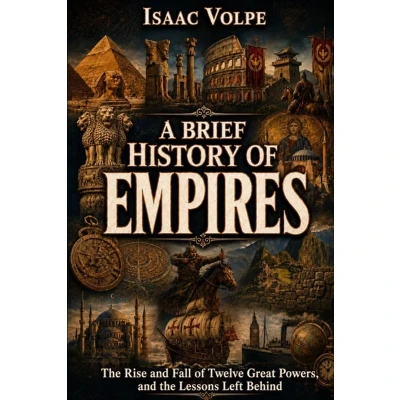
From the pharaohs of ancient Egypt to the final decades of the British Empire, humanity's greatest powers rose through ambition, military strength, political skill, technological innovation, and the ability to organize millions of lives. Yet the forces that made them powerful also created the weaknesses that eventually transformed or destroyed them. A Brief History of Empires takes readers across more than four thousand years to explore twelve extraordinary imperial systems: Ancient Egypt, Achaemenid Persia, Rome, Han China, the Maurya Empire, the Eastern Roman Empire, the early Islamic caliphates, the Mongol Empire, the Inca Empire, the Ottoman Empire, the Spanish Empire, and the British Empire. This is more than a history of rulers, battles, and territorial expansion. Isaac Volpe looks behind the monuments and official chronicles to reveal how empires actually functioned-and what life was like for the merchants, soldiers, farmers, workers, enslaved people, religious minorities, and conquered communities who sustained them. Inside, you will discover: - How geography, agriculture, trade, military innovation, and political legitimacy helped empires expand - Why roads, taxation, bureaucracy, communication, and cooperation with local elites mattered as much as armies - How successful expansion produced inequality, corruption, succession crises, and costly frontiers - Why empires rarely disappeared in a single moment-and how collapse differed from conquest, fragmentation, transformation, and decolonization - How ordinary people benefited from imperial stability while also enduring taxation, forced labor, displacement, and violence - Why imperial languages, borders, laws, institutions, and unresolved wounds continue to shape the modern world >Accessible, balanced, and carefully sourced, A Brief History of Empires offers neither nostalgic celebration nor simplistic condemnation. Instead, it reveals the achievements, contradictions, and human costs of imperial power. Empires disappear. Their consequences do not. READ A BRIEF HISTORY OF EMPIRES AND DISCOVER WHAT THE WORLD'S GREATEST POWERS LEFT BEHIND-AND WHY THEIR LESSONS STILL MATTER TODAY. TAGS history of empires, rise and fall of civilizations, ancient civilizations, world history, imperial history, Roman Empire, Persian Empire, Han Dynasty, Maurya Empire, Byzantine Empire, Islamic caliphates, Mongol Empire, Inca Empire, Ottoman Empire, Spanish Empire, British Empire, colonialism and decolonization, political power, imperial expansion, collapse of civilizations, lessons from history, comparative history
 Prijshistorie
* Prijshistorie bevat geen data van Amazon, Amazon Marketplace.
Prijzen voor het laatst bijgewerkt op:
 Gerelateerde resultaten
 Productspecificaties


