

€ 9,16 Gratis verzending

Uitgelicht
|
|
9,16 |
Naar shop
|

|
9,16 |
Naar shop
|

|
10,50 |
Naar shop
|
| VERGELIJK ALLE AANBIEDERS (3) | ||
 Beschrijving
Vergelijk aanbieders (3)
€ 9,16 Gratis verzending
€ 9,16 Gratis verzending
€ 10,50 € 2,99 verzendkosten Totaal € 13,49
Winkels met andere maten
Beschrijving
(1)
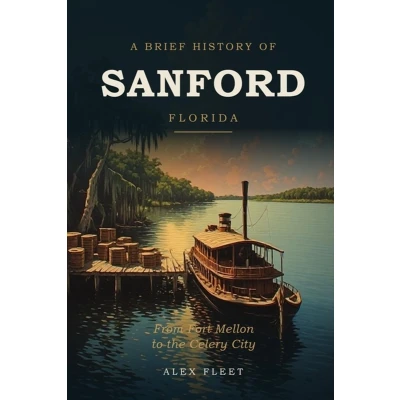
A concise, readable history of Sanford, Florida, the county seat on Lake Monroe that was planned as the gateway to all of South Florida and became something better by losing that bet. It begins where the St. Johns River steamboats had to stop, at a Second Seminole War stockade renamed for a captain killed defending it, and follows the wharf village of Mellonville, the Connecticut diplomat who bought more than twelve thousand acres in 1870 and platted his Gate City beside it, the Swedish settlers of New Upsala, and the January day in 1880 when Ulysses S. Grant broke ground for the railroad that would remake the peninsula. Then come the reversals that built the town a visitor sees today: the 1887 fire that turned a wooden main street into brick, the freezes of 1894 and 1895 that killed the orange groves, and the celery boom that made a farm town famous, shipped north in iced railcars from fields watered from below. Here too is Goldsboro, the Black-incorporated town of 1891 that Sanford annexed by legislative act in 1911, told straight from the public record, and the Navy jet base whose closure handed the city an international airport. Written from public sources, it anchors its dates to their records and says plainly where the record disagrees with itself. Ten short chapters, with a timeline and a guide to where the history is still standing.
 Prijshistorie
 * Prijshistorie bevat geen data van Amazon, Amazon Marketplace.
Prijzen voor het laatst bijgewerkt op:
 Gerelateerde resultaten
 Productspecificaties


