
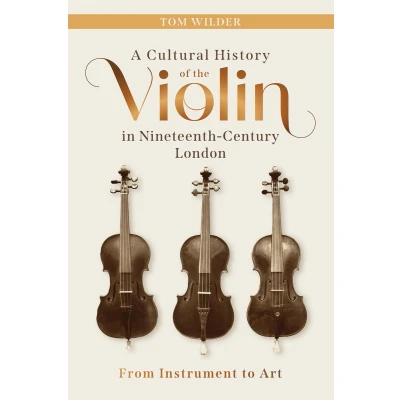
A Cultural History of the Violin in Nineteenth Century London
Uitgelicht

|
115,00
109,00 |
Naar shop
|
| VERGELIJK ALLE AANBIEDERS (1) | ||
 Beschrijving
Bol
Examines the violin's evolution as not just instrument but valued objet d'art through the eyes of musicians, collectors, makers, dealers, connoisseurs, journalists, auctioneers and traders. Examines the violin's evolution as not just instrument but valued objet d'art through the eyes of musicians, collectors, makers, dealers, connoisseurs, journalists, auctioneers and traders. The nineteenth century saw developments in the composition, performance and reception of classical music that led to an unprecedented shift in how the violin was appreciated, from humble craft object to one of art. A utilitarian tool defined in 1800 by its tonal properties became by century's end an expensive objet d'art, classified almost exclusively in terms of physical, visible properties. In London's vibrant musical life, Cremonese violins acquired special significance and in turn helped shape the beliefs, knowledge and behaviour of the disparate actors connected to the instrument: musicians, collectors, makers, dealers, connoisseurs, journalists, auctioneers and traders. By 1880, London had supplanted Paris as the centre of the international violin trade. One firm in particular, W.E. Hill & Sons, emerged as a major presence in both the local musical community and the global violin market. The Hills were makers, restorers, dealers, and connoisseurs. They were also writers, collectors, and melomaniacs deeply implicated in London's instrument auction and exhibition scene. The mutually reinforcing nature of these activities - which they consciously turned to account for commercial reasons - bear witness to events and developments earlier in the century. Their story illuminates this first study of the violin's nineteenth-century journey from simple musical instrument to mystified work of art.


Vergelijk aanbieders (1)

 Beschrijving
(1)
Beschrijving
(1)
Examines the violin's evolution as not just instrument but valued objet d'art through the eyes of musicians, collectors, makers, dealers, connoisseurs, journalists, auctioneers and traders. Examines the violin's evolution as not just instrument but valued objet d'art through the eyes of musicians, collectors, makers, dealers, connoisseurs, journalists, auctioneers and traders. The nineteenth century saw developments in the composition, performance and reception of classical music that led to an unprecedented shift in how the violin was appreciated, from humble craft object to one of art. A utilitarian tool defined in 1800 by its tonal properties became by century's end an expensive objet d'art, classified almost exclusively in terms of physical, visible properties. In London's vibrant musical life, Cremonese violins acquired special significance and in turn helped shape the beliefs, knowledge and behaviour of the disparate actors connected to the instrument: musicians, collectors, makers, dealers, connoisseurs, journalists, auctioneers and traders. By 1880, London had supplanted Paris as the centre of the international violin trade. One firm in particular, W.E. Hill & Sons, emerged as a major presence in both the local musical community and the global violin market. The Hills were makers, restorers, dealers, and connoisseurs. They were also writers, collectors, and melomaniacs deeply implicated in London's instrument auction and exhibition scene. The mutually reinforcing nature of these activities - which they consciously turned to account for commercial reasons - bear witness to events and developments earlier in the century. Their story illuminates this first study of the violin's nineteenth-century journey from simple musical instrument to mystified work of art.
 Productspecificaties
| EAN |
|
|---|---|
| Maat |
|
 Prijshistorie
Prijzen voor het laatst bijgewerkt op:
 Gerelateerde resultaten


