

€ 14,78 Gratis verzending

Gesponsorde links
|
|
14,78 |
Naar shop
|

|
14,78 |
Naar shop
|

|
16,00 |
Naar shop
|
| VERGELIJK ALLE AANBIEDERS (3) | ||
 Beschrijving
Vergelijk aanbieders (3)
Gesponsorde links · Sommige shops betalen ons een vergoeding
€ 14,78 Gratis verzending
€ 14,78 Gratis verzending
€ 16,00 € 2,99 verzendkosten Totaal € 18,99
Winkels met andere maten
Beschrijving
(1)
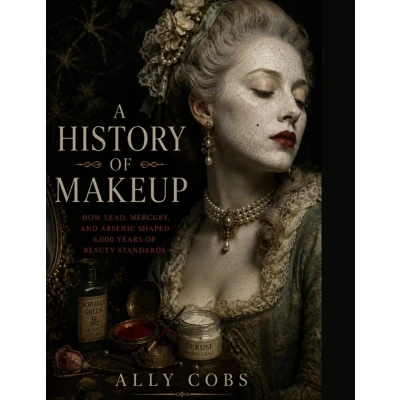
In 1861, a nineteen-year-old London girl named Matilda Scheurer began vomiting a thin green liquid. Her fingernails had turned green. Her eyes had turned green. Within days she was dead, poisoned by the arsenic dust shed from a fashionable artificial flower headdress she had spent her days assembling. Her death was not an isolated tragedy. It was the latest entry in a pattern already six thousand years old.For as long as human beings have pursued beauty, the substances used to achieve it have often been the same substances known to sicken, disfigure, and kill. This book traces that pattern from its beginning, when Egyptian cosmetic makers synthesized their own chemical compounds nearly two thousand years before the word chemistry existed, through the courts of ancient Greece and Rome, where physicians documented lead's dangers even as enslaved women applied it daily to the faces of those who owned them. It follows the story into medieval Europe, where theologians debated whether a painted face belonged to the devil, into Renaissance Venice, the undisputed cosmetics capital of its age, and into the hidden network of women who turned the poisons on their own dressing tables into an escape from marriages the law would not let them leave.Along the way, this book brings to life some of history's most compelling and least understood figures. A queen whose carefully painted face became a matter of national security, and whose final years read like a case study in heavy metal poisoning. An Irish beauty so celebrated that a shoemaker charged admission just to view a shoe he was making for her, and who was dead within a decade. A generation of Victorian women who dressed themselves to resemble the visible symptoms of a fatal illness, because dying, for a brief and strange period, had come to look beautiful.Written as narrative history rather than academic text, this book explains not just what happened but why, tracing the cause and effect that connects an Egyptian kohl pot to a twenty-first century lipstick still found to contain trace lead. Readers will come away with a clearer understanding of how beauty standards form, who has historically borne their cost, and why documented danger so rarely translated into meaningful protection until remarkably recently.This is a story about ambition, vanity, power, and survival, carried across dozens of civilizations by the ordinary human desire to be seen as beautiful. It asks a question that turns out to be surprisingly difficult to answer even today: how much is beauty actually worth, and who is really paying for it.If you're drawn to narrative nonfiction that reads like a story while never losing sight of the facts, this is a history worth spending an afternoon with.
 Prijshistorie
* Prijshistorie bevat geen data van Amazon, Amazon Marketplace.
Prijzen voor het laatst bijgewerkt op:
 Gerelateerde resultaten
 Productspecificaties


