


€ 115,00 Gratis verzending

Gesponsorde links
|
|
115,00 |
Naar shop
|

|
115,03 |
Naar shop
|

|
115,03 |
Naar shop
|
| VERGELIJK ALLE AANBIEDERS (3) | ||
 Beschrijving
Vergelijk aanbieders (3)
Gesponsorde links · Sommige shops betalen ons een vergoeding
€ 115,00 Gratis verzending
€ 115,03 Gratis verzending
€ 115,03 Gratis verzending
Winkels met andere maten
Beschrijving
(1)
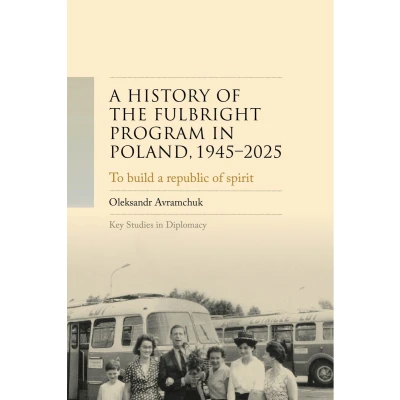
To Build a Republic of Spirit embarks on a revealing journey into the heart of U.S.-Poland relations, unveiling the profound role of the Fulbright Program in shaping bilateral dealings through educational and scientific diplomacy. This significant study explores the striking resonance of U.S. “liberal internationalism” in post-WWII Poland, including its little-known economic dimensions. Avramchuk’s contribution to our understanding of Polish-American relations and the Cold War itself raises far-reaching comparisons with the inefficient and constraining practices of Soviet and Eastern Bloc cultural diplomacy.Michael David-Fox, Institute for Human Sciences, Vienna This is a fine book on Cold War cultural relations that deserves a wide readership.Norman M. Naimark, Stanford University A must-read for Americanists, scholars of US–Polish relations, and anyone interested in cultural diplomacy during and after the Cold War.Anna Mazurkiewicz, University of Gdansk With rare access to Soviet as well as Polish and American sources, Avramchuk has written a clear-eyed, nuanced, and richly contextualized history of the six decades of the Fulbright Program in Poland.Patrice M. Dabrowski, Harvard Ukrainian Research Institute This is a valuable testament to all that was achieved and an implicit blueprint for future rebuilding.Nicholas J. Cull, University of Southern California Having been a Fulbright Scholar myself in Poland in 1994, I am delighted to see that all aspects of the program there have been so vividly brought to life in this first-rate book.Mark Kramer, Harvard University Narrating the history of post-war intellectual encounters across the Iron Curtain, this book shows how the Fulbright Program quietly cultivated an Atlantic-minded elite in Poland from the late 1950s to today. It follows the programme through Cold War secrecy, surveillance and hard binational bargaining, revealing Washington’s blend of idealism and pragmatism and Warsaw’s calculated openness, as scholars, technocrats and future politicians built networks that outlasted communism. The book reconstructs the ‘republic of the spirit’ they imagined – an ethical and intellectual fellowship beyond Party control – while tracing the circulation of ideas, expertise and cultural codes that shaped the 1989 transition and its aftermath. It examines how alumni legends were crafted and how daily compromises played out: democratic binationalism versus Party oversight, soft power versus security paranoia, mutual understanding versus image-management. In doing so, the book shows how international community-building actually worked, and why its foundations now feel precarious. It also uncovers the Fulbright Program’s unintended consequences, from the rise of Poland’s pro-American ‘mandarins of the future’ to their constrained strategic autonomy in a world where US liberal internationalism is fading. As America pares back its post-1945 role and loosens its own instruments of influence, the durability of this transatlantic community is uncertain. However, its legacy of shared mental maps, intellectual kinship and habits of cooperation still shapes Poland’s place in the world. To Build a Republic of Spirit embarks on a revealing journey into the heart of U.S.-Poland relations, unveiling the profound role of the Fulbright Program in shaping bilateral dealings through educational and scientific diplomacy. This meticulously researched narrative begins in 1959, exploring how this initiative transcended mere academic exchanges to become an important element in the Cold War’s political battleground. The narrative intertwines the development of American Studies in Poland, the rise of transnational academic networks, and the nuanced challenges of cross-cultural exchanges during and beyond the Cold War era. It sheds light on how the Fulbright Program was shaped by the complex interplay of U.S. and Communist cultural policies, contributing eventually to contemporary Poland’s unique pro-American stance. The book is not just a historical account; it’s an exploration of the enduring power and potential of educational initiatives in forging global understanding and cooperation. A leading Polish scholar of intellectual history, Oleksandr Avramchuk, has produced a superb overview of U.S.-Polish intellectual exchanges and programs during the first 80 years after the Second World War. Avramchuk shows that the Fulbright Program was of particular importance in bilateral scholarly relations during the Cold War. That has largely continued to be the case in the post-Cold War era, which Avramchuk also covers, albeit more briefly. Having been a Fulbright Scholar myself in Poland in 1994, I am delighted to see that all aspects of the program there have been so vividly brought to life in this first-rate book.Mark Kramer, Harvard University In his welcome history of the Fulbright program in Poland, Oleksandr Avramchuk clearly shows the enduring value of people to people exchange in foreign relations. His meticulously researched case not only bears out Fulbright’s founding insight – eighty years ago – but also highlights the contribution of the individual cultural diplomats who carried that banner forward. This is a valuable testament to all that was achieved and an implicit blueprint for future rebuilding.Nicholas J. Cull, University of Southern California Poland’s position as one of the most pro-American societies in the world has a long history. This timely book tells the story of the Fulbright Program in Poland. American ‘soft power’ and Cold War cultural diplomacy helped create a cadre of Polish Fulbright scholars, many of whom came to play important roles in Poland’s transition to democracy. Copiously researched and richly contextualized, this account of (what one hopes will be only) the initial six decades of the Fulbright Program in Poland demonstrates the value such educational exchanges had in easing the East-West tensions of the Cold War. Patrice M. Dabrowski, Harvard Ukrainian Research Institute Oleksandr Avramchuk’s history of the Fulbright Program in Poland, 1945-2025, provides us with detailed, multi-archival, and multi-national perspectives on the cultural diplomacy of the Fulbright program. But it does much more than that. By exploring the complex workings of cultural exchange in the period of Cold War it demonstrates how the goals of “soft power” through the exchanges met the needs of both Washington and Warsaw, and of the many scholars involved, but also how these goals were confounded by political and academic realities in both Poland and the U.S. This is a fine book on Cold War cultural relations that deserves a wide readership.Norman M. Naimark, Stanford University This pioneering study offers the first academic examination of the Fulbright Program in Poland, situated within the broader context of US–Polish relations and bilateral exchange programs. The author skillfully contextualizes educational diplomacy within the evolving relationship between the two countries since 1945. Grounded in meticulous research, this is a sound historical study of American public diplomacy and soft power at work. A must-read for Americanists, scholars of US–Polish relations, and anyone interested in cultural diplomacy during and after the Cold War.Anna Mazurkiewicz, University of Gdansk This significant study explores the striking resonance of U.S. “liberal internationalism” in post-WWII Poland, including its little-known economic dimensions. Avramchuk’s contribution to our understanding of Polish-American relations and the Cold War itself raises far-reaching comparisons with the inefficient and constraining practices of Soviet and Eastern Bloc cultural diplomacy. Michael David-Fox, Institute for Human Sciences, Vienna
 Prijshistorie
* Prijshistorie bevat geen data van Amazon, Amazon Marketplace.
Prijzen voor het laatst bijgewerkt op:
 Gerelateerde resultaten
 Productspecificaties


