


€ 18,74 Gratis verzending

Uitgelicht
|
|
18,74 |
Naar shop
|
| VERGELIJK ALLE AANBIEDERS (1) | ||
 Beschrijving
Vergelijk aanbieders (1)
€ 18,74 Gratis verzending
Winkels met andere maten
Beschrijving
(1)
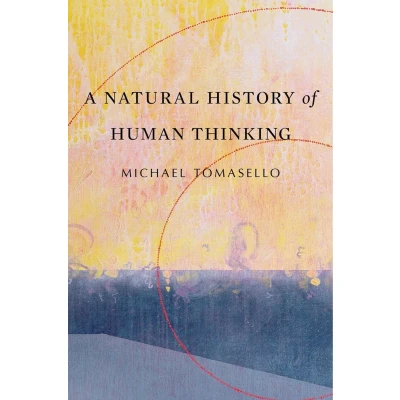
A Wall Street Journal Favorite Read of the Year A Guardian Top Science Book of the Year Tool-making or culture, language or religious belief: ever since Darwin, thinkers have struggled to identify what fundamentally differentiates human beings from other animals. In this much-anticipated book, Michael Tomasello weaves his twenty years of comparative studies of humans and great apes into a compelling argument that cooperative social interaction is the key to our cognitive uniqueness. Once our ancestors learned to put their heads together with others to pursue shared goals, humankind was on an evolutionary path all its own. “Michael Tomasello is one of the few psychologists to have conducted intensive research on both human children and chimpanzees, and A Natural History of Human Thinking reflects not only the insights enabled by such cross-species comparisons but also the wisdom of a researcher who appreciates the need for asking questions whose answers generate biological insight. His book helps us to understand the differences, as well as the similarities, between human brains and other brains.” —David P. Barash, Wall Street Journal
 Productspecificaties
| EAN |
|
|---|---|
| Maat |
|
 Prijshistorie
 Prijzen voor het laatst bijgewerkt op:
 Gerelateerde resultaten


