


gebruikt € 32,50 Gratis verzending

Uitgelicht
|
|
32,50 |
Naar shop
|

|
46,99 |
Naar shop
|
| VERGELIJK ALLE AANBIEDERS (2) | ||
 Beschrijving
Vergelijk aanbieders (2)
gebruikt € 32,50 Gratis verzending
€ 46,99 Gratis verzending
Winkels met andere maten
Beschrijving
(1)
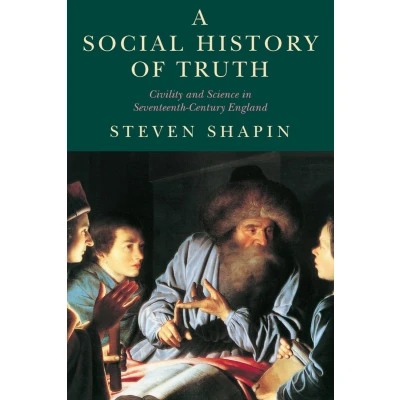
This work employs detailed historical narrative to argue about the establishment of factual knowledge both in science and in everyday practice. Accounts of gentlemen-philosophers are used to illustrate the study's claim that trust is imperative for constituting every kind of knowledge. How do we come to trust our knowledge of the world? What are the means by which we distinguish true from false accounts? Why do we credit one observational statement over another? This study engages these universal questions through a recreation of a crucial period in the history of early modern science: the social world of gentlemen-philosophers in 17th-century England. The author paints a picture of the relations between gentlemanly culture and scientific practice. He argues that problems of credibility in science were practically solved through the codes and conventions of genteel conduct: trust, civility, honour, and integrity. These codes formed, and arguably still form, an important basis for securing reliable knowledge about the natural world. Shapin uses detailed historical narrative to argue about the establishment of factual knowledge both in science and in everyday practice. Accounts of the mores and manners of gentlemen-philosophers are used to illustrate Shapin's broad claim that trust is imperative for constituting every kind of knowledge. Knowledge-making is always a collective enterprise: people have to know whom to trust in order to know something about the natural world.
 Gerelateerde resultaten
 Productspecificaties


