
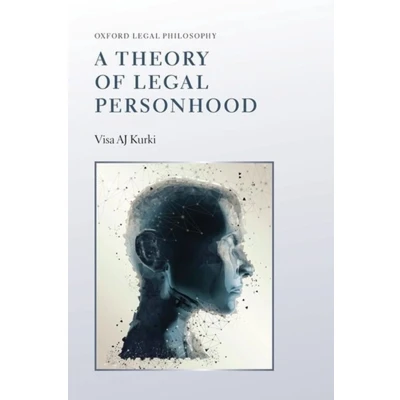
A Theory of Legal Personhood
Uitgelicht

|
139,81 |
Naar shop
|

|
140,17 |
Naar shop
|

|
140,99 |
Naar shop
|
| VERGELIJK ALLE AANBIEDERS (3) | ||
 Beschrijving
Bol
This work offers a new theory of what it means to be a legal person and suggests that it is best understood as a cluster property. The book explores the origins of legal personhood, the issues afflicting a traditional understanding of the concept, and the numerous debates surrounding the topic. Who, or what, is a 'person' according to the law? How did this understanding of personhood come about? In the twenty-first century, environmentalism, animal rights, artificial intelligence, and corporate personhood have compelled us to consider these questions once again. Legal personhood is a foundational concept of Western legal thought and A Theory of Legal Personhood seeks to go beyond contemporary debates, challenging our very understanding of legal personhood itself. Drawing on extensive research, scholarship, legislation, and court cases from around the globe, this book offers readers -- with or without previous knowledge -- new insights into legal personhood. It scrutinizes how personhood came to be understood synonymously with the holding of legal rights. It then posits that a better understanding of legal personhood is as a cluster property. Finally, it applies this new theory to explain and structure the numerous debates surrounding legal personhood.


 Beschrijving
(1)
Beschrijving
(1)
This work offers a new theory of what it means to be a legal person and suggests that it is best understood as a cluster property. The book explores the origins of legal personhood, the issues afflicting a traditional understanding of the concept, and the numerous debates surrounding the topic. Who, or what, is a 'person' according to the law? How did this understanding of personhood come about? In the twenty-first century, environmentalism, animal rights, artificial intelligence, and corporate personhood have compelled us to consider these questions once again. Legal personhood is a foundational concept of Western legal thought and A Theory of Legal Personhood seeks to go beyond contemporary debates, challenging our very understanding of legal personhood itself. Drawing on extensive research, scholarship, legislation, and court cases from around the globe, this book offers readers -- with or without previous knowledge -- new insights into legal personhood. It scrutinizes how personhood came to be understood synonymously with the holding of legal rights. It then posits that a better understanding of legal personhood is as a cluster property. Finally, it applies this new theory to explain and structure the numerous debates surrounding legal personhood.
 Productspecificaties
 Prijshistorie
* Prijshistorie bevat geen data van Amazon, Amazon Marketplace.
Prijzen voor het laatst bijgewerkt op:
 Gerelateerde resultaten


