

€ 87,51 € 3,14 verzendkosten Totaal € 90,65

Uitgelicht
|
|
87,51 |
Naar shop
|

|
99,99 |
Naar shop
|
| VERGELIJK ALLE AANBIEDERS (2) | ||
 Beschrijving
Vergelijk aanbieders (2)
€ 87,51 € 3,14 verzendkosten Totaal € 90,65
€ 99,99 Gratis verzending
Winkels met andere maten
Beschrijving
(1)
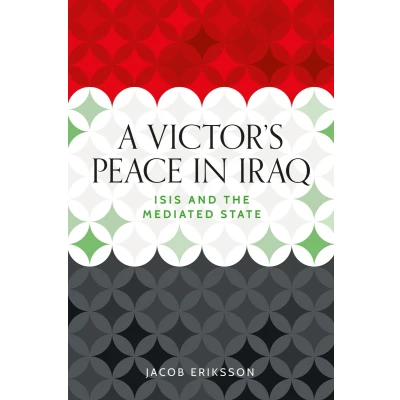
This book offers a detailed analysis of peacebuilding in Iraq following the territorial defeat of ISIS. Focusing on key aspects such as power-sharing, security provision, transitional justice, and reconciliation, it reflects on the role of the state but also of key actors such as tribes and militia, who all contribute to the prevailing peace. This book offers an astute reading of Iraq's messy political transition and security sector reform. Coupling theoretical insights with sharp case studies of Iraqi cities and provinces, it is essential for anyone interested in the Iraqi security sector and its governance.- Ariel Ahram, Virginia TechThis book offers a compelling account of how the Iraqi state has been built in the aftermath of ISIS.- Renad Mansour, Chatham HouseDespite a lack of systemic reform following its military victory over ISIS in 2017, Iraq has defied many expectations and avoided a return to renewed civil war. This groundbreaking book explains how this has been achieved and examines the nature of the prevailing victor’s peace. It is a peace that has emerged by default rather than by design, reflecting pragmatism and power rather than normative principles. While this contributes to its sustainability, it is simultaneously a fragile peace vulnerable due to limited legitimacy, corruption, and volatile international oil markets. Offering a unique analysis of peacebuilding in Iraq, the book places recent developments within the historical context of two decades of external intervention and conflict. It explores the complexities of peacebuilding and the tensions between competing Iraqi visions of political order, focusing on key themes such as political power-sharing, security provision, transitional justice, and reconciliation. Challenging liberal understandings of the nature of both peace and the state, the book provides fresh insight into theories and practices of peacebuilding and statebuilding, emphasising the need to look beyond conventional models of governance and order. One such innovative notion which lies at the heart of the analysis, the ‘mediated state’, acknowledges the vital peacebuilding role played by a variety political and social actors, such as tribes, militia, and civil society actors, and their fluid relationship to the state. The book explains how together, these actors have established a delicate equilibrium of competition and cooperation which constitutes peace. 'Jacob Eriksson offers an astute reading of Iraq's messy political transition and security sector reform. Coupling theoretical insights with sharp case studies of Iraqi cities and provinces, he shows how a country with obvious signs of ongoing violence is locked into the politics of peace and reconstruction and why a country where militias proliferate insists on centralized state building. This book is essential for anyone interested in the Iraqi security sector and its governance.'- Ariel Ahram, Virginia Tech'This book offers a compelling account of how the Iraqi state has been built in the aftermath of ISIS. Eriksson shows how post-war Iraq has developed through complex and dynamic relationships between government institutions, armed groups and communities, providing an important new framework for understanding governance after violent conflict.'- Renad Mansour, Chatham HouseFollowing the territorial defeat of ISIS, a victor’s peace has emerged in Iraq which challenges certain liberal preconceptions about how to build sustainable peace. This book explores the nature of the prevailing peace in Iraq and the peacebuilding processes behind it, focusing on political power-sharing, security provision, transitional justice, and reconciliation. Based on extensive interviews with Iraqi and international peacebuilding practitioners, this is the first comprehensive analysis of contemporary Iraqi peacebuilding, grounded in the history of the post-2003 conflict cycle. By examining the role of the state but also other political and social actors such as tribes and militia, it problematises state-centric notions of political authority, order, and power. This book is essential to understanding a complex peace which has proved sustainable yet remains fragile.
 Prijshistorie
 * Prijshistorie bevat geen data van Amazon.
Prijzen voor het laatst bijgewerkt op:
 Gerelateerde resultaten
 Productspecificaties


