
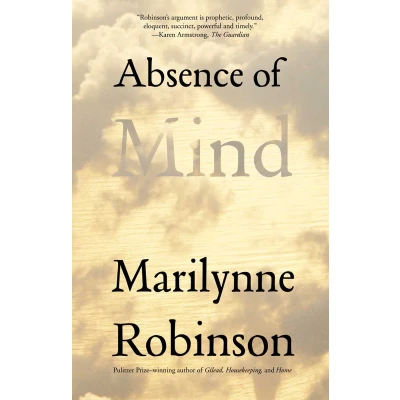
Absence of Mind: the Dispelling Inwardness from Modern Myth Self
Uitgelicht

|
15,00 |
Naar shop
|
| VERGELIJK ALLE AANBIEDERS (1) | ||
 Beschrijving
Bol
By defending the importance of individual reflection, this title celebrates the power and variety of human consciousness in the tradition of William James. It explores the nature of subjectivity and considers the culture in which Sigmund Freud that was situated and its influence on his model of self and civilization. One of our best contemporary writers explores the tension between science and religion and reveals how our concept of mind determines how we understand and value human nature and human civilization “These impassioned pages require and reward very close attention.”—Michael Dirda, Washington Post In this ambitious book, acclaimed writer Marilynne Robinson applies her astute intellect to some of the most vexing topics in the history of human thought—science, religion, and consciousness. Crafted with the same care and insight as her award-winning novels, Absence of Mind challenges postmodern atheists who crusade against religion under the banner of science. In Robinson’s view, scientific reasoning does not denote a sense of logical infallibility, as thinkers like Richard Dawkins might suggest. Instead, in its purest form, science represents a search for answers. It engages the problem of knowledge, an aspect of the mystery of consciousness, rather than providing a simple and final model of reality. By defending the importance of individual reflection, Robinson celebrates the power and variety of human consciousness in the tradition of William James. She explores the nature of subjectivity and considers the culture in which Sigmund Freud was situated and its influence on his model of self and civilization. Through keen interpretations of language, emotion, science, and poetry, Absence of Mind restores human consciousness to its central place in the religion-science debate.


Vergelijk aanbieders (1)

 Beschrijving
(1)
Beschrijving
(1)
By defending the importance of individual reflection, this title celebrates the power and variety of human consciousness in the tradition of William James. It explores the nature of subjectivity and considers the culture in which Sigmund Freud that was situated and its influence on his model of self and civilization. One of our best contemporary writers explores the tension between science and religion and reveals how our concept of mind determines how we understand and value human nature and human civilization “These impassioned pages require and reward very close attention.”—Michael Dirda, Washington Post In this ambitious book, acclaimed writer Marilynne Robinson applies her astute intellect to some of the most vexing topics in the history of human thought—science, religion, and consciousness. Crafted with the same care and insight as her award-winning novels, Absence of Mind challenges postmodern atheists who crusade against religion under the banner of science. In Robinson’s view, scientific reasoning does not denote a sense of logical infallibility, as thinkers like Richard Dawkins might suggest. Instead, in its purest form, science represents a search for answers. It engages the problem of knowledge, an aspect of the mystery of consciousness, rather than providing a simple and final model of reality. By defending the importance of individual reflection, Robinson celebrates the power and variety of human consciousness in the tradition of William James. She explores the nature of subjectivity and considers the culture in which Sigmund Freud was situated and its influence on his model of self and civilization. Through keen interpretations of language, emotion, science, and poetry, Absence of Mind restores human consciousness to its central place in the religion-science debate.
 Productspecificaties
| EAN |
|
|---|---|
| Maat |
|
 Prijshistorie
Prijzen voor het laatst bijgewerkt op:
 Gerelateerde resultaten


