
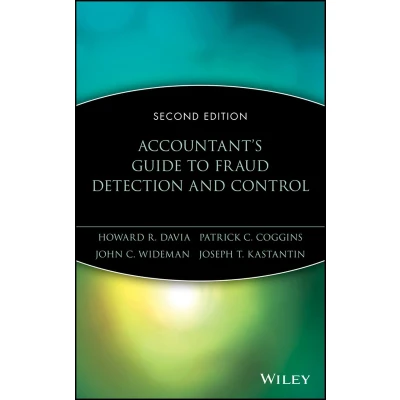
Accountant's Guide To Fraud Detection And Control
Uitgelicht

|
27,59 |
Naar shop
|
| VERGELIJK ALLE AANBIEDERS (1) | ||
 Beschrijving
Bol Partner
The US Chamber of Commerce estimates that the cost of employee and management fraud exceeds $100 billion annually. In most cases, fraud is discovered completely by accident, the perpetrator does not get convicted, and the losses are not recovered. The authors estimate that only about 20% of all fraud gets discovered at all. From internal control structures that are not fraud-specific to insufficient communication in the fraud discovery-to-investigation and conviction process, fraudulent activity is a widespread fact of life in the business world. Historically, the corporate tendency has been to react to fraud after the fact, rather than to be proactive in its prevention. And in most cases, blame is directed at accountants and auditors. Unfortunately, these officers are rarely provided with the resources, proper training, and commitment from top management that are essential to effective fraud detection and control. The Accountant?s Guide to Fraud Detection and Control offers comprehensive direction for this largely uncharted area. Two types of fraud are addressed in this book: fraudulent financial reporting, also known as "Treadway" fraud, usually originating in the top management sector; and "asset-theft" fraud, the more common and more costly type, likely to be practiced by virtually anyone, including outsiders. Treadway fraud is being adequately detected by independent auditors (CPAs) in their annual audits. Asset-theft fraud is not being adequately detected by anyone, with very few exceptions. From following clues to achieving a prosecution, here is sound advice that accountants and auditors will find invaluable. Businesses lose over $100 billion a year to fraud. Only 20 percent is discovered. Who?s to blame? Accountants and internal auditors are often the scapegoats for management?s insufficient fraud detection operations and guidelines. At last, here is comprehensive, intermediate training for evaluating, devising, and installing fraud-specific internal controls, and for conducting proactive fraud-specific examinations. Including actual case studies, the authors show accountants and auditors how to: Anticipate problems and follow clues Successfully disclose fraud Compile the evidence necessary to prosecute acts of fraud Develop investigative techniques Create effective internal controls . . . and much more, to fill the needs of this crucial area. ing From internal control structures that are not fraud-specific toinsufficient communication in the fraud discovery-to-investigationand conviction process, fraudulent activity is a widespread fact oflife in the business world. Historically, the corporate tendencyhas been to react to fraud after the fact, rather than to beproactive in its prevention. And in most cases, blame is directedat accountants and auditors. Unfortunately, these officers arerarely provided with the resources, proper training, and commitmentfrom top management that are essential to effective fraud detectionand control. The Accountant s Guide to Fraud Detection and Controloffers comprehensive direction for this largely unchartedarea. Two types of fraud are addressed in this book: fraudulent financialreporting, also known as "Treadway" fraud, usually originating inthe top management sector; and "asset-theft" fraud, the more commonand more costly type, likely to be practiced by virtually anyone,including outsiders. Treadway fraud is being adequately detected byindependent auditors (CPAs) in their annual audits. Asset-theftfraud is not being adequately detected by anyone, with very fewexceptions. From following clues to achieving a prosecution, hereis sound advice that accountants and auditors will findinvaluable. Businesses lose over $100 billion a year to fraud. Only 20 percentis discovered. Who s to blame? Accountants and internal auditors are often the scapegoats formanagement s insufficient fraud detection operations andguidelines. At last, here is comprehensive, intermediate trainingfor evaluating, devising, and installing fraud-specific internalcontrols, and for conducting proactive fraud-specific examinations.Including actual case studies, the authors show accountants andauditors how to: * Anticipate problems and follow clues * Successfully disclose fraud * Compile the evidence necessary to prosecute acts of fraud * Develop investigative techniques * Create effective internal controls . . . and much more, to fillthe needs of this crucial area. ing


Vergelijk aanbieders (1)

 Beschrijving
(1)
Beschrijving
(1)
The US Chamber of Commerce estimates that the cost of employee and management fraud exceeds $100 billion annually. In most cases, fraud is discovered completely by accident, the perpetrator does not get convicted, and the losses are not recovered. The authors estimate that only about 20% of all fraud gets discovered at all. From internal control structures that are not fraud-specific to insufficient communication in the fraud discovery-to-investigation and conviction process, fraudulent activity is a widespread fact of life in the business world. Historically, the corporate tendency has been to react to fraud after the fact, rather than to be proactive in its prevention. And in most cases, blame is directed at accountants and auditors. Unfortunately, these officers are rarely provided with the resources, proper training, and commitment from top management that are essential to effective fraud detection and control. The Accountant?s Guide to Fraud Detection and Control offers comprehensive direction for this largely uncharted area. Two types of fraud are addressed in this book: fraudulent financial reporting, also known as "Treadway" fraud, usually originating in the top management sector; and "asset-theft" fraud, the more common and more costly type, likely to be practiced by virtually anyone, including outsiders. Treadway fraud is being adequately detected by independent auditors (CPAs) in their annual audits. Asset-theft fraud is not being adequately detected by anyone, with very few exceptions. From following clues to achieving a prosecution, here is sound advice that accountants and auditors will find invaluable. Businesses lose over $100 billion a year to fraud. Only 20 percent is discovered. Who?s to blame? Accountants and internal auditors are often the scapegoats for management?s insufficient fraud detection operations and guidelines. At last, here is comprehensive, intermediate training for evaluating, devising, and installing fraud-specific internal controls, and for conducting proactive fraud-specific examinations. Including actual case studies, the authors show accountants and auditors how to: Anticipate problems and follow clues Successfully disclose fraud Compile the evidence necessary to prosecute acts of fraud Develop investigative techniques Create effective internal controls . . . and much more, to fill the needs of this crucial area. ing From internal control structures that are not fraud-specific toinsufficient communication in the fraud discovery-to-investigationand conviction process, fraudulent activity is a widespread fact oflife in the business world. Historically, the corporate tendencyhas been to react to fraud after the fact, rather than to beproactive in its prevention. And in most cases, blame is directedat accountants and auditors. Unfortunately, these officers arerarely provided with the resources, proper training, and commitmentfrom top management that are essential to effective fraud detectionand control. The Accountant s Guide to Fraud Detection and Controloffers comprehensive direction for this largely unchartedarea. Two types of fraud are addressed in this book: fraudulent financialreporting, also known as "Treadway" fraud, usually originating inthe top management sector; and "asset-theft" fraud, the more commonand more costly type, likely to be practiced by virtually anyone,including outsiders. Treadway fraud is being adequately detected byindependent auditors (CPAs) in their annual audits. Asset-theftfraud is not being adequately detected by anyone, with very fewexceptions. From following clues to achieving a prosecution, hereis sound advice that accountants and auditors will findinvaluable. Businesses lose over $100 billion a year to fraud. Only 20 percentis discovered. Who s to blame? Accountants and internal auditors are often the scapegoats formanagement s insufficient fraud detection operations andguidelines. At last, here is comprehensive, intermediate trainingfor evaluating, devising, and installing fraud-specific internalcontrols, and for conducting proactive fraud-specific examinations.Including actual case studies, the authors show accountants andauditors how to: * Anticipate problems and follow clues * Successfully disclose fraud * Compile the evidence necessary to prosecute acts of fraud * Develop investigative techniques * Create effective internal controls . . . and much more, to fillthe needs of this crucial area. ing
 Productspecificaties
| EAN |
|
|---|---|
| Maat |
|
 Prijshistorie
Prijzen voor het laatst bijgewerkt op:
 Gerelateerde resultaten


