
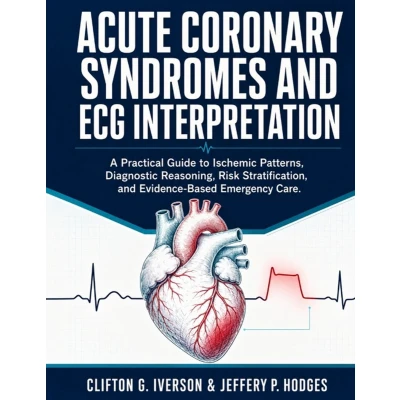
ACUTE CORONARY SYNDROMES and ECG INTERPRETATION: A Practical Guide to Ischemic Patterns, Diagnostic Reasning, Risk Stratification, Evidence-Based Emergency Care.
Uitgelicht

|
103,19 |
Naar shop
|

|
128,39 |
Naar shop
|

|
128,39 |
Naar shop
|
| VERGELIJK ALLE AANBIEDERS (3) | ||
 Beschrijving
Bol
When the ECG is subtle but the danger is real, knowing what to look for can change everything.Acute coronary syndromes do not always arrive with unmistakable symptoms or textbook ST elevation. The first tracing may appear nondiagnostic. Troponin may not yet be elevated. A dangerous coronary occlusion may be hidden by bundle branch block, ventricular pacing, baseline abnormalities, or an uncommon ischemic pattern.Acute Coronary Syndromes and ECG Interpretation bridges the gap between memorizing ECG shapes and understanding what they mean in a time-sensitive clinical setting.Beginning with cardiac electrophysiology, coronary anatomy, lead placement, and technical accuracy, this practical guide develops a systematic approach to ECG interpretation before progressing into the recognition, assessment, and management of acute myocardial ischemia.Inside, readers will learn how to: - Apply a consistent method for analyzing rate, rhythm, axis, intervals, QRS morphology, ST segments, and T waves- Recognize STEMI, NSTEMI, posterior infarction, right ventricular infarction, and regional coronary patterns- Identify high-risk findings such as de Winter T waves, Wellens patterns, hyperacute T waves, and modified Sgarbossa criteria- Detect acute coronary occlusion even when conventional ST-elevation thresholds are not met- Distinguish true ischemia from early repolarization, pericarditis, myocarditis, ventricular hypertrophy, pulmonary embolism, electrolyte abnormalities, and other ACS mimics- Integrate serial ECGs with symptoms, cardiac troponin, echocardiography, angiography, and clinical risk assessment- Understand immediate stabilization, antithrombotic therapy, reperfusion strategies, revascularization, and post-infarction complications- Adapt assessment and care for women, older adults, pregnant patients, and people with diabetes or chronic kidney diseaseWith 18 structured chapters, 74 educational figures, chapter learning objectives, quick-reference appendices, and a detailed glossary, the book connects electrical findings with coronary anatomy, clinical reasoning, emergency decision-making, and long-term recovery.It is especially valuable for medical students, residents, nurses, paramedics, physician associates, ECG technicians, emergency care professionals, and other healthcare learners who want to interpret ECGs with greater structure and clinical understanding.Go beyond pattern recognition. Learn to connect the tracing, the patient, and the urgency of the clinical situation.


 Beschrijving
(1)
Beschrijving
(1)
When the ECG is subtle but the danger is real, knowing what to look for can change everything.Acute coronary syndromes do not always arrive with unmistakable symptoms or textbook ST elevation. The first tracing may appear nondiagnostic. Troponin may not yet be elevated. A dangerous coronary occlusion may be hidden by bundle branch block, ventricular pacing, baseline abnormalities, or an uncommon ischemic pattern.Acute Coronary Syndromes and ECG Interpretation bridges the gap between memorizing ECG shapes and understanding what they mean in a time-sensitive clinical setting.Beginning with cardiac electrophysiology, coronary anatomy, lead placement, and technical accuracy, this practical guide develops a systematic approach to ECG interpretation before progressing into the recognition, assessment, and management of acute myocardial ischemia.Inside, readers will learn how to: - Apply a consistent method for analyzing rate, rhythm, axis, intervals, QRS morphology, ST segments, and T waves- Recognize STEMI, NSTEMI, posterior infarction, right ventricular infarction, and regional coronary patterns- Identify high-risk findings such as de Winter T waves, Wellens patterns, hyperacute T waves, and modified Sgarbossa criteria- Detect acute coronary occlusion even when conventional ST-elevation thresholds are not met- Distinguish true ischemia from early repolarization, pericarditis, myocarditis, ventricular hypertrophy, pulmonary embolism, electrolyte abnormalities, and other ACS mimics- Integrate serial ECGs with symptoms, cardiac troponin, echocardiography, angiography, and clinical risk assessment- Understand immediate stabilization, antithrombotic therapy, reperfusion strategies, revascularization, and post-infarction complications- Adapt assessment and care for women, older adults, pregnant patients, and people with diabetes or chronic kidney diseaseWith 18 structured chapters, 74 educational figures, chapter learning objectives, quick-reference appendices, and a detailed glossary, the book connects electrical findings with coronary anatomy, clinical reasoning, emergency decision-making, and long-term recovery.It is especially valuable for medical students, residents, nurses, paramedics, physician associates, ECG technicians, emergency care professionals, and other healthcare learners who want to interpret ECGs with greater structure and clinical understanding.Go beyond pattern recognition. Learn to connect the tracing, the patient, and the urgency of the clinical situation.
 Productspecificaties
 Prijshistorie
* Prijshistorie bevat geen data van Amazon, Amazon Marketplace.
Prijzen voor het laatst bijgewerkt op:
 Gerelateerde resultaten


