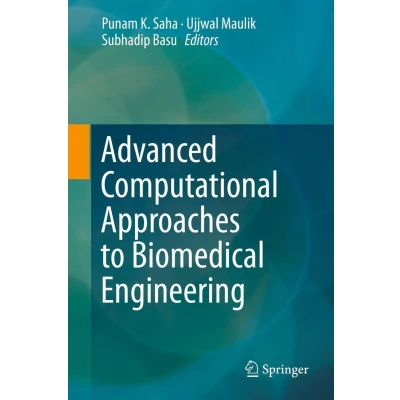

Advanced Computational Approaches to Biomedical Engineering

Prijzen vanaf
44,38

Uitgelicht

VERGELIJK ALLE AANBIEDERS (2)

Beschrijving

Bol Partner There has been rapid growth in biomedical engineering in recent decades, given advancements in medical imaging and physiological modelling and sensing systems, coupled with immense growth in computational and network technology, analytic approaches, visualization and virtual-reality, man-machine interaction and automation. There has been rapid growth in biomedical engineering in recent decades, given advancements in medical imaging and physiological modelling and sensing systems, coupled with immense growth in computational and network technology, analytic approaches, visualization and virtual-reality, man-machine interaction, and automation. Biomedical engineering involves applying engineering principles to the medical and biological sciences, and it comprises several topics including biomedicine, medical imaging, physiological modelling and sensing, instrumentation, real-time systems, automation and control, signal processing, image reconstruction, processing and analysis, pattern recognition, and biomechanics. It holds great promise for the diagnosis and treatment of complex medical conditions, in particular, as we can now target direct clinical applications, research and development in biomedical engineering is helping us to develop innovative implants and prosthetics, create new medical imaging technologies, and improve tools and techniques for the detection, prevention and treatment of diseases. The contributing authors in this edited book present representative surveys of advances in their respective fields, focusing in particular on techniques for the analysis of complex biomedical data. The book will be a useful reference for graduate students, researchers, and industrial practitioners in computer science, biomedical engineering, and computational and molecular biology. There has been rapid growth in biomedical engineering in recent decades, given advancements in medical imaging and physiological modelling and sensing systems, coupled with immense growth in computational and network technology, analytic approaches, visualization and virtual-reality, man-machine interaction and automation. Biomedical engineering involves applying engineering principles to the medical and biological sciences and it comprises several topics including biomedicine, medical imaging, physiological modelling and sensing, instrumentation, real-time systems, automation and control, signal processing, image reconstruction, processing and analysis, pattern recognition, and biomechanics. It holds great promise for the diagnosis and treatment of complex medical conditions, in particular, as we can now target direct clinical applications, research and development in biomedical engineering is helping us to develop innovative implants and prosthetics, create new medical imaging technologies and improve tools and techniques for the detection, prevention and treatment of diseases. The contributing authors in this edited book present representative surveys of advances in their respective fields, focusing in particular on techniques for the analysis of complex biomedical data. The book will be a useful reference for graduate students, researchers and industrial practitioners in computer science, biomedical engineering, and computational and molecular biology.

Vergelijk aanbieders (2)

Shop
Prijs
Verzendkosten
Totale prijs
44,38
gebruikt
Gratis
44,38
Naar shop
Gratis Shipping Costs
48,99
Gratis
48,99
Naar shop
Gratis Shipping Costs
Beschrijving (2)
Bol Partner

There has been rapid growth in biomedical engineering in recent decades, given advancements in medical imaging and physiological modelling and sensing systems, coupled with immense growth in computational and network technology, analytic approaches, visualization and virtual-reality, man-machine interaction and automation. There has been rapid growth in biomedical engineering in recent decades, given advancements in medical imaging and physiological modelling and sensing systems, coupled with immense growth in computational and network technology, analytic approaches, visualization and virtual-reality, man-machine interaction, and automation. Biomedical engineering involves applying engineering principles to the medical and biological sciences, and it comprises several topics including biomedicine, medical imaging, physiological modelling and sensing, instrumentation, real-time systems, automation and control, signal processing, image reconstruction, processing and analysis, pattern recognition, and biomechanics. It holds great promise for the diagnosis and treatment of complex medical conditions, in particular, as we can now target direct clinical applications, research and development in biomedical engineering is helping us to develop innovative implants and prosthetics, create new medical imaging technologies, and improve tools and techniques for the detection, prevention and treatment of diseases. The contributing authors in this edited book present representative surveys of advances in their respective fields, focusing in particular on techniques for the analysis of complex biomedical data. The book will be a useful reference for graduate students, researchers, and industrial practitioners in computer science, biomedical engineering, and computational and molecular biology. There has been rapid growth in biomedical engineering in recent decades, given advancements in medical imaging and physiological modelling and sensing systems, coupled with immense growth in computational and network technology, analytic approaches, visualization and virtual-reality, man-machine interaction and automation. Biomedical engineering involves applying engineering principles to the medical and biological sciences and it comprises several topics including biomedicine, medical imaging, physiological modelling and sensing, instrumentation, real-time systems, automation and control, signal processing, image reconstruction, processing and analysis, pattern recognition, and biomechanics. It holds great promise for the diagnosis and treatment of complex medical conditions, in particular, as we can now target direct clinical applications, research and development in biomedical engineering is helping us to develop innovative implants and prosthetics, create new medical imaging technologies and improve tools and techniques for the detection, prevention and treatment of diseases. The contributing authors in this edited book present representative surveys of advances in their respective fields, focusing in particular on techniques for the analysis of complex biomedical data. The book will be a useful reference for graduate students, researchers and industrial practitioners in computer science, biomedical engineering, and computational and molecular biology.

Bol

There has been rapid growth in biomedical engineering in recent decades, given advancements in medical imaging and physiological modelling and sensing systems, coupled with immense growth in computational and network technology, analytic approaches, visualization and virtual-reality, man-machine interaction and automation. Biomedical engineering involves applying engineering principles to the medical and biological sciences and it comprises several topics including biomedicine, medical imaging, physiological modelling and sensing, instrumentation, real-time systems, automation and control, signal processing, image reconstruction, processing and analysis, pattern recognition, and biomechanics. It holds great promise for the diagnosis and treatment of complex medical conditions, in particular, as we can now target direct clinical applications, research and development in biomedical engineering is helping us to develop innovative implants and prosthetics, create new medical imaging technologies and improve tools and techniques for the detection, prevention and treatment of diseases. The contributing authors in this edited book present representative surveys of advances in their respective fields, focusing in particular on techniques for the analysis of complex biomedical data. The book will be a useful reference for graduate students, researchers and industrial practitioners in computer science, biomedical engineering, and computational and molecular biology.


Productspecificaties

EAN
  • 9783642415388
  • 9783642415395
Maat


Prijshistorie

Prijzen voor het laatst bijgewerkt op:

Uitgelichte Keuze
44,38
Naar shop
