


€ 68,99 Gratis verzending

Uitgelicht
|
|
68,99 |
Naar shop
|

|
71,00 |
Naar shop
|

|
71,00 |
Naar shop
|
| VERGELIJK ALLE AANBIEDERS (3) | ||
 Beschrijving
Vergelijk aanbieders (3)
€ 68,99 Gratis verzending
€ 71,00 Gratis verzending
€ 71,00 Gratis verzending
Winkels met andere maten
Beschrijving
(1)
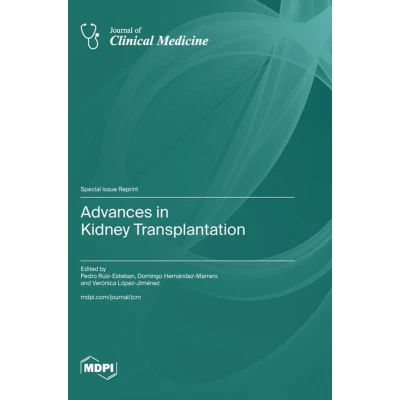
Medical practice in kidney transplantation is advancing toward innovative approaches that optimize pharmacological safety, immunosuppressive management, and the prevention of post-transplant complications. This Special Issue compiles studies on the efficacy of finerenone in kidney transplant recipients, selection patterns for kidney transplantation versus dialysis in lung recipients with end-stage renal disease, post-transplant glomerulonephritis recurrence, long-term outcomes in living donors with multiple renal arteries, clinical factors influencing tacrolimus metabolism and formulation comparisons, the use of Torque Teno virus as a marker of net immunosuppression, compatibility of immunosuppressive therapies with lactation, and the superiority of LCPT tacrolimus in preventing post-transplant diabetes in high-risk patients.These works highlight advances in non-invasive biomarkers, optimization of immunosuppressants such as extended-release tacrolimus, and strategies to mitigate risks like glomerular recurrence, post-transplant diabetes, and over-immunosuppression. The focus on prospective cohorts and narrative reviews underscores the importance of personalizing treatment to improve graft survival and long-term clinical outcomes in complex populations, including living donors and patients with comorbidities. This Reprint collects key evidence to guide clinical decisions in transplant nephrology.
 Prijshistorie
 * Prijshistorie bevat geen data van Amazon, Amazon Marketplace.
Prijzen voor het laatst bijgewerkt op:
 Gerelateerde resultaten
 Productspecificaties


