

€ 14,41 Gratis verzending

Uitgelicht
|
|
14,41 |
Naar shop
|

|
14,41 |
Naar shop
|

|
16,00 |
Naar shop
|
| VERGELIJK ALLE AANBIEDERS (3) | ||
 Beschrijving
Vergelijk aanbieders (3)
€ 14,41 Gratis verzending
€ 14,41 Gratis verzending
€ 16,00 € 2,99 verzendkosten Totaal € 18,99
Winkels met andere maten
Beschrijving
(1)
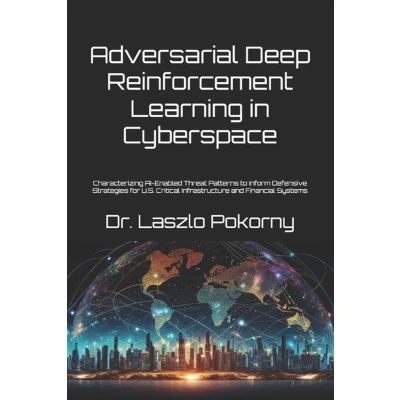
The twenty-first century is defined by our pervasive reliance on digital infrastructure. From powering our homes and economies to facilitating global communication and governance, these interconnected systems form the bedrock of modern society. Yet, this digital foundation is under constant siege. The evolution of cyber threats has outpaced traditional defense mechanisms, characterized by an alarming increase in their speed, sophistication, and scale. Adversaries, ranging from nation-states to sophisticated criminal organizations, are continuously developing novel methods to exploit vulnerabilities, disrupt services, and compromise sensitive data. The potential impact of a successful attack on critical national infrastructure-such as the energy grid, financial markets, or transportation networks-could be devastating, jeopardizing national security, economic stability, and public safety. In this context, Artificial Intelligence (AI) has emerged not merely as a technological advancement, but as a critical determinant in the future of cybersecurity and national security. Among the most promising AI paradigms for tackling these complex challenges is Deep Reinforcement Learning (DRL). DRL enables systems to learn optimal strategies through trial-and-error interactions with their environment, a process that mimics human learning and adaptation. This capability holds immense potential for developing dynamic, adaptive, and intelligent cybersecurity solutions capable of detecting novel threats, responding autonomously to incidents, and continuously improving defensive postures. Imagine an AI agent learning to play a complex game not by being programmed with every possible move, but by playing millions of games, learning from its successes and failures. This is the essence of DRL, and it is precisely this learning capability that we aim to harness for defense. However, the very power that makes DRL a compelling tool for defense also makes it a formidable weapon in the hands of adversaries. AI can be leveraged to automate vulnerability discovery, create evasive malware, and orchestrate highly coordinated and intelligent cyberattacks. Understanding this dual-use nature is paramount for national security policymakers and cybersecurity practitioners. This book aims to bridge the gap between the theoretical underpinnings of DRL and its practical implications for protecting critical infrastructure. We will explore the foundational concepts of DRL, analyze how it can be weaponized, examine its specific applications in defending vital sectors, and discuss the strategic, methodological, and ethical considerations involved. Our goal is to equip readers-cybersecurity professionals, AI researchers, national security experts, and policymakers-with the knowledge necessary to understand, anticipate, and counter AI-driven threats while leveraging AI for a more secure future.
 Prijshistorie
 * Prijshistorie bevat geen data van Amazon, Amazon Marketplace.
Prijzen voor het laatst bijgewerkt op:
 Gerelateerde resultaten
 Productspecificaties


