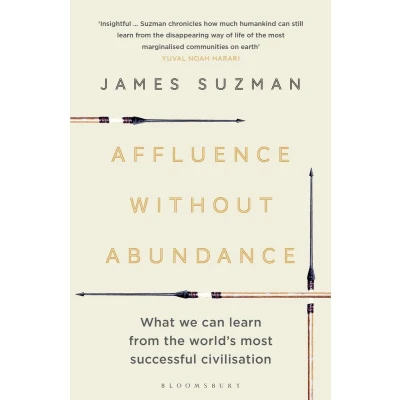

Affluence Without Abundance
Uitgelicht
|
9,99
9,25 |
Naar shop
|
|
25,28 |
Naar shop
|
Beschrijving
Bol Partner
Insightful and well-written . . . [Suzman chronicles] how much humankind can still learn from the disappearing way of life of the most marginalized communities on earth. Yuval Noah Harari, author of SAPIENS: A BRIEF HISTORY OF HUMAN KIND and HOMO DEUS: A BRIEF HISTORY OF TOMORROWWASHINGTON POST'S 50 NOTABLE WORKS OF NONFICTION IN 2017AN NPR BEST BOOK OF 2017A vibrant portrait of the original affluent societythe Bushmen of southern Africaby the anthropologist who has spent much of the last twenty-five years documenting their encounter with modernity.If the success of a civilization is measured by its endurance over time, then the Bushmen of the Kalahari are by far the most successful in human history. A hunting and gathering people who made a good living by working only as much as needed to exist in harmony with their hostile desert environment, the Bushmen have lived in southern Africa since the evolution of our species nearly two hundred thousand years ago.In Affluence Without Abundance, anthropologist James Suzman vividly brings to life a proud and private people, introducing unforgettable members of their tribe, and telling the story of the collision between the modern global economy and the oldest hunting and gathering society on earth. In rendering an intimate picture of a people coping with radical change, it asks profound questions about how we now think about matters such as work, wealth, equality, contentment, and even time. Not since Elizabeth Marshall Thomass The Harmless People in 1959 has anyone provided a more intimate or insightful account of the Bushmen or of what we might learn about ourselves from our shared history as hunter-gatherers.
Bol_______________ 'Insightful ... Avoiding both modern conceits and romantic fantasies, Suzman chronicles how economics and politics have finally conquered some of the last outposts of hunter-gatherers, and how much humankind can still learn from the disappearing way of life of the most marginalized communities on earth.' - Yuval Noah Harari, author of Sapiens and Homo Deus 'Fascinating' - Sunday Times 'Elegant and absorbing' - Financial Times 'Profoundly moving' - Irish Times _______________ From acclaimed anthropologist James Suzman, a portrait of the 'original affluent society' – the Bushmen of southern Africa – and what their way of life can teach us today. What can we learn from the Bushmen? If the success of a civilisation is measured by its endurance over time, then the Bushmen of the Kalahari are by far the most successful in human history. Anthropologist James Suzman spent twenty-five years in Southern Africa documenting their way of life and encounters with modern society, gathering invaluable lessons about work, wealth, happiness, equality and time. 'To know what it is like to live as people lived for most of human history, you would have to find one of the places where traditional hunting-and-gathering practices are still alive…Fortunately for us, the anthropologist James Suzman did exactly that…The news here is that the lives of most of our progenitors were better than we think. We're flattering ourselves by believing that their existence was so grim and that our modern, civilized one is, by comparison, so great.' - John Lancaster, The New Yorker
Productspecificaties
| EAN |
|
|---|---|
| Maat |
|
Prijshistorie
Prijzen voor het laatst bijgewerkt op:
