








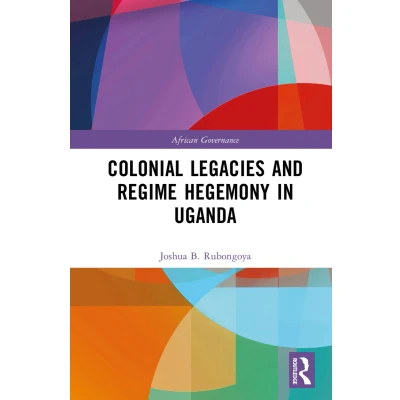
African Governance Colonial Legacies and Regime Hegemony in Uganda
Uitgelicht

|
170,00 |
Naar shop
|
 Beschrijving
Bol
This book explains the prevalence of electoral authoritarianism (or multi-party autocracy) in Ugandan politics, examining why repeated elections have not deepened democracy. Shedding light on how to deconstruct movement politics and consolidate democracy in Africa, this book will interest scholars of African politics and democratization. This book explains the prevalence of electoral authoritarianism (or multi-party autocracy) in the politics of sub-Saharan Africa and examines why repeated elections have not deepened democracy. Using Uganda as a case study, the book examines the hegemonic regimes that underpin electoral authoritarian regimes in the context of a colonial legacy. Employing a historical institutionalist approach, the author considers independence struggles as formative moments and the nationalist period as a critical juncture in Uganda’s historical experience. The analysis posits that the structure and dynamic of political organization/participation adopted in the run up to independence and the responses by the colonial state laid the ground for “movement politics” and a path toward post-colonial autocratic rule. Shedding light on how to deconstruct movement politics and consolidate democracy in Africa, this book will be of interest to scholars of African politics and democratization.


Vergelijk aanbieders (1)

 Beschrijving
(1)
Beschrijving
(1)
This book explains the prevalence of electoral authoritarianism (or multi-party autocracy) in Ugandan politics, examining why repeated elections have not deepened democracy. Shedding light on how to deconstruct movement politics and consolidate democracy in Africa, this book will interest scholars of African politics and democratization. This book explains the prevalence of electoral authoritarianism (or multi-party autocracy) in the politics of sub-Saharan Africa and examines why repeated elections have not deepened democracy. Using Uganda as a case study, the book examines the hegemonic regimes that underpin electoral authoritarian regimes in the context of a colonial legacy. Employing a historical institutionalist approach, the author considers independence struggles as formative moments and the nationalist period as a critical juncture in Uganda’s historical experience. The analysis posits that the structure and dynamic of political organization/participation adopted in the run up to independence and the responses by the colonial state laid the ground for “movement politics” and a path toward post-colonial autocratic rule. Shedding light on how to deconstruct movement politics and consolidate democracy in Africa, this book will be of interest to scholars of African politics and democratization.
 Productspecificaties
| EAN |
|
|---|---|
| Maat |
|
 Prijshistorie
Prijzen voor het laatst bijgewerkt op:
 Gerelateerde resultaten


