
Agricultural Modernisation and the Green Revolution in Twentieth Century World: 9
Uitgelicht

|
93,82 |
Naar shop
|

|
110,98
109,00 |
Naar shop
|
| VERGELIJK ALLE AANBIEDERS (2) | ||
 Beschrijving
Bol
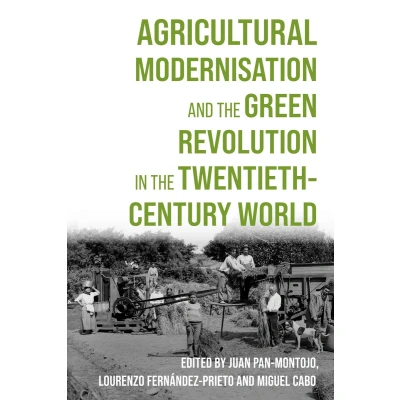
An overarching history of the origins, development, and application of agricultural innovation in the past, and of the paradigms and institutional frameworks in which they were developed throughout the twentieth century. An overarching history of the origins, development, and application of agricultural innovation in the past, and of the paradigms and institutional frameworks in which they were developed throughout the twentieth century. From the late nineteenth century onwards, rural societies and agrarian production across the world were profoundly transformed. Prior to the Second World War, technological innovations developed within an intensive organic framework and advanced largely in dialogue with existing producers. After the war, social engineering became the prevailing model in agricultural and rural policies almost everywhere. Modernisation was imposed from above, targeting so-called "archaic" or "anti-modern" peasants and farmers, who were pushed to produce ever-greater quantities of food, timber, and other raw materials through the expanded use of industrial and inorganic resources. Applied as a USA political programme in Asian, Latin American and African countries, this strategy became known as the "Green Revolution". Although it undermined rural societies and eroded the sustainability of agricultural production, it remained central to political agendas, leaving a difficult legacy for future generations. This book analyses agrarian change and agricultural policies before and after 1945, highlighting the socio-economic and environmental consequences of these two very different periods in global agrarian history. Its diverse case studies span continents and political systems, considering topics from post-war reconstruction in the UK and Denmark to development policies in the Belgian Congo and post-fascist Ethiopia; from production projects in communist Hungary to agricultural transformations across the Southern Cone and India. Chapter 6 is available as Open Access under the Creative Commons licence CC BY-NC-ND


 Beschrijving
(1)
Beschrijving
(1)
An overarching history of the origins, development, and application of agricultural innovation in the past, and of the paradigms and institutional frameworks in which they were developed throughout the twentieth century. An overarching history of the origins, development, and application of agricultural innovation in the past, and of the paradigms and institutional frameworks in which they were developed throughout the twentieth century. From the late nineteenth century onwards, rural societies and agrarian production across the world were profoundly transformed. Prior to the Second World War, technological innovations developed within an intensive organic framework and advanced largely in dialogue with existing producers. After the war, social engineering became the prevailing model in agricultural and rural policies almost everywhere. Modernisation was imposed from above, targeting so-called "archaic" or "anti-modern" peasants and farmers, who were pushed to produce ever-greater quantities of food, timber, and other raw materials through the expanded use of industrial and inorganic resources. Applied as a USA political programme in Asian, Latin American and African countries, this strategy became known as the "Green Revolution". Although it undermined rural societies and eroded the sustainability of agricultural production, it remained central to political agendas, leaving a difficult legacy for future generations. This book analyses agrarian change and agricultural policies before and after 1945, highlighting the socio-economic and environmental consequences of these two very different periods in global agrarian history. Its diverse case studies span continents and political systems, considering topics from post-war reconstruction in the UK and Denmark to development policies in the Belgian Congo and post-fascist Ethiopia; from production projects in communist Hungary to agricultural transformations across the Southern Cone and India. Chapter 6 is available as Open Access under the Creative Commons licence CC BY-NC-ND
 Productspecificaties
 Prijshistorie
* Prijshistorie bevat geen data van Amazon.
Prijzen voor het laatst bijgewerkt op:
 Gerelateerde resultaten


