


€ 184,90 Gratis verzending

Uitgelicht
|
|
184,90 |
Naar shop
|

|
318,05 |
Naar shop
|
| VERGELIJK ALLE AANBIEDERS (2) | ||
 Beschrijving
Vergelijk aanbieders (2)
€ 184,90 Gratis verzending
€ 318,05 € 5,71 verzendkosten Totaal € 323,76
Winkels met andere maten
Beschrijving
(1)
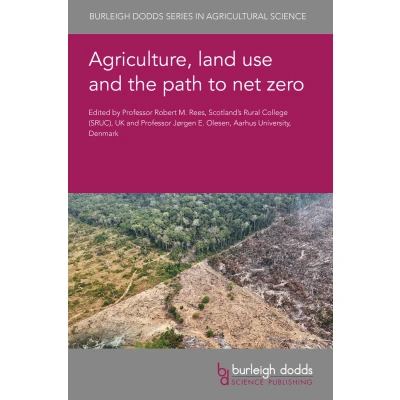
This book provides a comprehensive review of the contribution of land use for farming to global greenhouse gas emissions and how agricultural land use can be optimised to achieve net zero. It’s been suggested that farming contributes to around 12% of global greenhouse gas (GHG) emissions, with land use associated with agriculture (such as deforestation to clear land for crop production) increasing this overall share to 25% of global GHG emissions. As the climate change emergency continues to threaten global food production and security, there is a growing need to modify or relocate existing farming systems to reduce their environmental impact and ensure a safe, sustainable and sufficient supply of food. Agriculture, land use and the path to net zero provides a comprehensive overview of the role of agriculture in contributing to GHG emissions, including the role of farming in generating different GHGs and how these can be reduced. It also assesses ways agricultural land use can be used to offset emissions through different carbon sequestration strategies (whether through changing farming practices or restoring landscapes to optimise carbon storage). The book then reviews the challenges and opportunities faced by different regions in developing appropriate land use strategies for agriculture to achieve the goal of net zero. Edited by two world-renowned experts, the book will be a standard reference for university and other researchers in environmental and agricultural science, as well as government and other agencies supporting the transition to net zero in agriculture. Dr Robert M. Rees is an Emeritus Professor in Agriculture and Climate Change and former Head of the Carbon Management Centre at Scotland’s Rural College (SRUC), UK. With over 200 published papers, Professor Rees is internationally renowned for his research on soil carbon sequestration, agricultural greenhouse gas (GHG) mitigation, nutrient cycling and ways agriculture can adapt to climate change. Dr Jørgen E. Olesen is Professor in Climate Change and Agriculture and Head of the Department of Agroecology at Aarhus University, Denmark. He is also an Adjunct Professor at both China Agricultural University and Gansu Agricultural University, China. He is internationally recognized for his research on the effects of agriculture on the environment and how environmental change affects agroecosystems. It’s been suggested that farming contributes to around 12% of global greenhouse gas (GHG) emissions, with land use associated with agriculture (such as deforestation to clear land for crop production) increasing this overall share to 25% of global GHG emissions. As the climate change emergency continues to threaten global food production and security, there is a growing need to modify or relocate existing farming systems to reduce their environmental impact and ensure a safe, sustainable and sufficient supply of food.Agriculture, land use and the path to net zero provides a comprehensive overview of the role of agriculture in contributing to GHG emissions, including the role of farming in generating different GHGs and how these can be reduced. It also assesses ways agricultural land use can be used to offset emissions through different carbon sequestration strategies (whether through changing farming practices or restoring landscapes to optimise carbon storage). The book then reviews the challenges and opportunities faced by different regions in developing appropriate land use strategies for agriculture to achieve the goal of net zero.
 Prijshistorie
 * Prijshistorie bevat geen data van Amazon.
Prijzen voor het laatst bijgewerkt op:
 Gerelateerde resultaten
 Productspecificaties


