

€ 66,90 Gratis verzending

Gesponsorde links
|
|
66,90 |
Naar shop
|

|
66,90 |
Naar shop
|

|
67,99 |
Naar shop
|
| VERGELIJK ALLE AANBIEDERS (3) | ||
 Beschrijving
Vergelijk aanbieders (3)
Gesponsorde links · Sommige shops betalen ons een vergoeding
€ 66,90 Gratis verzending
€ 66,90 Gratis verzending
€ 67,99 Gratis verzending
Winkels met andere maten
Beschrijving
(1)
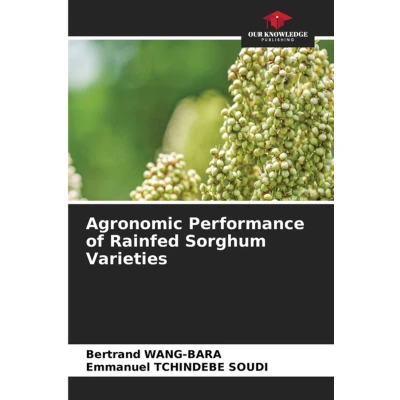
In Cameroon, and particularly in the Bénoué Department, the cultivation of rainfed sorghum (Sorghum bicolor (L.) Moench) plays a central role in terms of food security, the economy, and pastoralism. Unfortunately, sorghum production faces a lack of utilization of so-called local and improved varieties adapted to the agroclimatic conditions of the region. The objective of this study is to contribute to improving the production of four dual-purpose rainfed sorghum varieties (for food and forage) by evaluating their adaptability through their agromorphological traits and yield performance. These results indicate that the Grinkan, Soubatimi, Koidawa, and local ecotype varieties exhibit good agromorphological performance under the constraints of the Sudano-Sahelian zone. The Soubatimi, local ecotype, and Koidawa varieties have high grain potential. All varieties studied are considered suitable for good forage production, particularly the Grinkan and local ecotype varieties.
 Prijshistorie
* Prijshistorie bevat geen data van Amazon, Amazon Marketplace.
Prijzen voor het laatst bijgewerkt op:
 Gerelateerde resultaten
 Productspecificaties


