
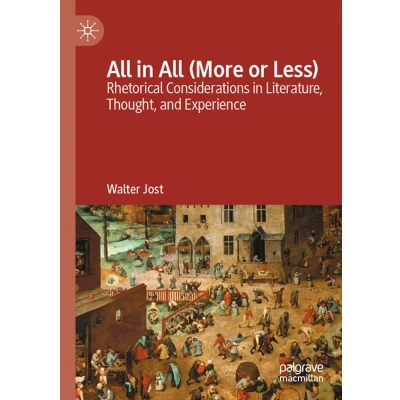
All in (More or Less): Rhetorical Considerations Literature, Thought, and Experience
Uitgelicht

|
122,00
112,99 |
Naar shop
|
| VERGELIJK ALLE AANBIEDERS (1) | ||
 Beschrijving
Bol
This book reinvents aspects of the rhetorical tradition as part of a philosophical pluralism oriented to “All-in-Allness”. The book as a whole culminates in Part Three, where the author demonstrates how “ordinary language criticism” fruitfully bears on cultural models – film, drama, novels, poetry – belonging to “American Low Modernism.” This book reinvents aspects of the rhetorical tradition as part of a philosophical pluralism oriented to “All-in-Allness”. Its chapters unfold some of the ethical and intellectual responsibilities philosophy and rhetoric share, their commitments toward literature broadly conceived, the limited authority of their interpretations, and the kinds of judgments they issue in. Part One, drawing chiefly on Ludwig Wittgenstein and Richard McKeon, leverages a central line of argument regarding “Rationality” in the pragmatism of Robert Brandom. Part Two pivots to specific instances of the range of rhetorical argument found in surprising places and in sophisticated arrangements. The book as a whole culminates in Part Three, where the author demonstrates how “ordinary language criticism” fruitfully bears on cultural models – film, drama, novels, poetry – belonging to “American Low Modernism.”


Vergelijk aanbieders (1)

 Beschrijving
(1)
Beschrijving
(1)
This book reinvents aspects of the rhetorical tradition as part of a philosophical pluralism oriented to “All-in-Allness”. The book as a whole culminates in Part Three, where the author demonstrates how “ordinary language criticism” fruitfully bears on cultural models – film, drama, novels, poetry – belonging to “American Low Modernism.” This book reinvents aspects of the rhetorical tradition as part of a philosophical pluralism oriented to “All-in-Allness”. Its chapters unfold some of the ethical and intellectual responsibilities philosophy and rhetoric share, their commitments toward literature broadly conceived, the limited authority of their interpretations, and the kinds of judgments they issue in. Part One, drawing chiefly on Ludwig Wittgenstein and Richard McKeon, leverages a central line of argument regarding “Rationality” in the pragmatism of Robert Brandom. Part Two pivots to specific instances of the range of rhetorical argument found in surprising places and in sophisticated arrangements. The book as a whole culminates in Part Three, where the author demonstrates how “ordinary language criticism” fruitfully bears on cultural models – film, drama, novels, poetry – belonging to “American Low Modernism.”
 Productspecificaties
| EAN |
|
|---|---|
| Maat |
|
 Prijshistorie
Prijzen voor het laatst bijgewerkt op:
 Gerelateerde resultaten


