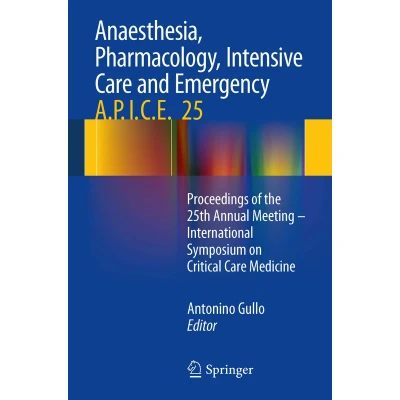

Anaesthesia, Pharmacology, Intensive Care and Emergency A.P.I.C.E.

Prijzen vanaf
69,00

Uitgelicht

VERGELIJK ALLE AANBIEDERS (2)

Beschrijving

Bol Partner Peri- and postoperative managements as well as treatment of surgical infections and of pain, new and old artificial ventilation strategies are some of the most relevant topics the volume deal with in this new edition. The APICE 2013 yearbook examines recent advances in various aspects of critical care medicine and highlights the importance of effective communication among researchers, scientists, and clinicians. Among the many topics addressed are trauma care organization, the management of patients with cardiovascular, kidney, and lung disorders, issues relating to severe infections and sepsis, and the humanization of end of life care. The overriding goal of the book is to provide guidance and stimulate further thought on how professional performance in critical care medicine can be improved. “Triple B” translational research, from the bench to the bedside and back again (via the translation of clinical observations into new research questions), will play a major role in this context, and is particularly discussed in the chapter about sepsis and organ dysfunction. There is no doubt that the transfer of far-reaching and dynamic developments in molecular and cellular biology into clinical practice will be a key component in delivering the care required by individual patients. Innovation, training and research are the pillars that support a process deriving from basic science and multi-professional/multidisciplinary interventions. The APICE 2012 yearbook deals with several innovations for optimising prevention and management measures for the critically ill, by integrating diagnostic procedures with pharmacological and technological options. Peri- and postoperative managements as well as treatment of surgical infections and of pain, new and old artificial ventilation strategies are some of the most relevant topics the volume deal with in this new edition. The volume focuses also on the improvement standards and quality of care; on the expanding concept of clinical governance and professionalism and on the importance of ethical principles for establishing a process of patient-centered and evidence-based care.

Vergelijk aanbieders (2)

Shop
Prijs
Verzendkosten
Totale prijs
69,00
gebruikt
Gratis
69,00
Naar shop
Gratis Shipping Costs
88,28
Gratis
88,28
Naar shop
Gratis Shipping Costs
Beschrijving (2)
Bol Partner

Peri- and postoperative managements as well as treatment of surgical infections and of pain, new and old artificial ventilation strategies are some of the most relevant topics the volume deal with in this new edition. The APICE 2013 yearbook examines recent advances in various aspects of critical care medicine and highlights the importance of effective communication among researchers, scientists, and clinicians. Among the many topics addressed are trauma care organization, the management of patients with cardiovascular, kidney, and lung disorders, issues relating to severe infections and sepsis, and the humanization of end of life care. The overriding goal of the book is to provide guidance and stimulate further thought on how professional performance in critical care medicine can be improved. “Triple B” translational research, from the bench to the bedside and back again (via the translation of clinical observations into new research questions), will play a major role in this context, and is particularly discussed in the chapter about sepsis and organ dysfunction. There is no doubt that the transfer of far-reaching and dynamic developments in molecular and cellular biology into clinical practice will be a key component in delivering the care required by individual patients. Innovation, training and research are the pillars that support a process deriving from basic science and multi-professional/multidisciplinary interventions. The APICE 2012 yearbook deals with several innovations for optimising prevention and management measures for the critically ill, by integrating diagnostic procedures with pharmacological and technological options. Peri- and postoperative managements as well as treatment of surgical infections and of pain, new and old artificial ventilation strategies are some of the most relevant topics the volume deal with in this new edition. The volume focuses also on the improvement standards and quality of care; on the expanding concept of clinical governance and professionalism and on the importance of ethical principles for establishing a process of patient-centered and evidence-based care.

Bol

Advances in intensive and critical care medicine occur rapidly. Innovation, training and research are the pillars that support a process deriving from basic science and multiprofessional/multidisciplinary interventions. The APICE 2010 Yearbook highlights several innovations for optimising prevention and management measures for the critically ill by integrating diagnostic procedures with pharmacological and technological options. Considering that cerebral, respiratory, cardiovascular, renal and metabolic dysfunctions occurring during serious illnesses or syndromes represent risk factors for patient survival, the final goal remains multifaceted: to improve standards and quality of care; to introduce the expanding concept of clinical governance and professionalism; to focus on the importance of ethical principles for establishing a process of patient-centered and evidence-based care. For these reasons, medical professionals must reach a consensus regarding the importance of continuing medical education.


Productspecificaties

EAN
  • 9788847055155
  • 9788847020146
  • 9788847055162
Maat


Prijshistorie

Prijzen voor het laatst bijgewerkt op:

Uitgelichte Keuze
69,00
Naar shop
