
Anticipating Political Risk
Uitgelicht

|
40,89 |
Naar shop
|

|
47,57 |
Naar shop
|

|
47,57 |
Naar shop
|
| VERGELIJK ALLE AANBIEDERS (3) | ||
 Beschrijving
Bol
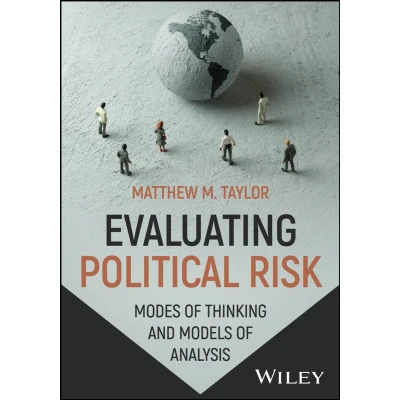
Geopolitical uncertainty and political risk are defining challenges of the contemporary world, yet too often they are analyzed only haphazardly, without rigor or method. Evaluating Political Risk: Modes of Thinking and Models of Analysis addresses this gap by providing a didactic introduction to proven frameworks for how to better assess political uncertainty and risk. Drawing on best practices and recognized models from diverse fields such as psychology, public policy, political science, economics, and history, Evaluating Political Risk provides readers with a range of approaches to systematize their reasoning and avoid common analytical pitfalls. The progressive chapter structure moves from foundational concepts through increasingly sophisticated analytical models, building cumulative competence. Each chapter pairs a specific method or model with real-world illustrations drawn from multiple regions, political systems, and risk types. Readers will gain practical guidance on assessing instability, evaluating bargaining situations, and developing probabilistic understandings of possible futures. Evaluating Political Risk will serve as a useful primer and reference for anyone whose professional duties require them to navigate political risk and develop well-reasoned, actionable plans in the face of uncertainty. Systematize political risk analysis with rigorous analytical tools The contemporary world faces a unique combination of interconnectedness with increasing levels of geopolitical uncertainty and political risk. The need for models and methods with which to evaluate uncertainty and risk has never been greater Evaluating Political Risk: Modes of Thinking and Models of Analysis provides a systematic analytical toolkit, presenting methods and models grounded in insights from psychology, public policy, political science, economics, and history. Evaluating Political Risk teaches readers to systematize their reasoning and apply analytical tools responsibly. The progressive chapter structure moves from foundational concepts of risk and uncertainty through increasingly sophisticated analytical models, developing cumulative competence. Each chapter pairs a specific method or model with applied illustrations, drawn from around the world. Readers will also find: A curriculum-ready chapter sequence designed to map onto a standard 15-week semester for graduate or advanced undergraduate courses Practical guidance on analytical methods for assessing instability, navigating negotiations, and strategizing resource allocation Interdisciplinary frameworks integrating insights from psychology, economics, history, and public policy into coherent political risk methods Contemporary case studies illustrating each model's real-world application across multiple regions, political systems, and types of risk Tools applicable beyond corporate settings, that can serve intelligence analysts, diplomats, NGO leaders, and journalists Written for advanced undergraduates, graduate students in international relations, political science, and business, as well as working professionals, Evaluating Political Risk delivers the analytical toolkit needed to reason through political risk and uncertainty with discipline and analytical rigor.


 Beschrijving
(1)
Beschrijving
(1)
Geopolitical uncertainty and political risk are defining challenges of the contemporary world, yet too often they are analyzed only haphazardly, without rigor or method. Evaluating Political Risk: Modes of Thinking and Models of Analysis addresses this gap by providing a didactic introduction to proven frameworks for how to better assess political uncertainty and risk. Drawing on best practices and recognized models from diverse fields such as psychology, public policy, political science, economics, and history, Evaluating Political Risk provides readers with a range of approaches to systematize their reasoning and avoid common analytical pitfalls. The progressive chapter structure moves from foundational concepts through increasingly sophisticated analytical models, building cumulative competence. Each chapter pairs a specific method or model with real-world illustrations drawn from multiple regions, political systems, and risk types. Readers will gain practical guidance on assessing instability, evaluating bargaining situations, and developing probabilistic understandings of possible futures. Evaluating Political Risk will serve as a useful primer and reference for anyone whose professional duties require them to navigate political risk and develop well-reasoned, actionable plans in the face of uncertainty. Systematize political risk analysis with rigorous analytical tools The contemporary world faces a unique combination of interconnectedness with increasing levels of geopolitical uncertainty and political risk. The need for models and methods with which to evaluate uncertainty and risk has never been greater Evaluating Political Risk: Modes of Thinking and Models of Analysis provides a systematic analytical toolkit, presenting methods and models grounded in insights from psychology, public policy, political science, economics, and history. Evaluating Political Risk teaches readers to systematize their reasoning and apply analytical tools responsibly. The progressive chapter structure moves from foundational concepts of risk and uncertainty through increasingly sophisticated analytical models, developing cumulative competence. Each chapter pairs a specific method or model with applied illustrations, drawn from around the world. Readers will also find: A curriculum-ready chapter sequence designed to map onto a standard 15-week semester for graduate or advanced undergraduate courses Practical guidance on analytical methods for assessing instability, navigating negotiations, and strategizing resource allocation Interdisciplinary frameworks integrating insights from psychology, economics, history, and public policy into coherent political risk methods Contemporary case studies illustrating each model's real-world application across multiple regions, political systems, and types of risk Tools applicable beyond corporate settings, that can serve intelligence analysts, diplomats, NGO leaders, and journalists Written for advanced undergraduates, graduate students in international relations, political science, and business, as well as working professionals, Evaluating Political Risk delivers the analytical toolkit needed to reason through political risk and uncertainty with discipline and analytical rigor.
 Productspecificaties
 Prijshistorie
* Prijshistorie bevat geen data van Amazon, Amazon Marketplace.
Prijzen voor het laatst bijgewerkt op:
 Gerelateerde resultaten


