
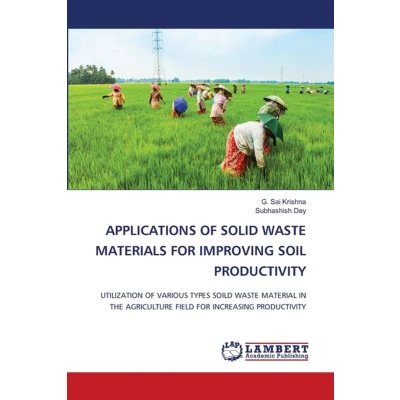
APPLICATIONS OF SOLID WASTE MATERIALS FOR IMPROVING SOIL PRODUCTIVITY: UTILIZATION VARIOUS TYPES SOILD MATERIAL IN THE AGRICULTURE FIELD INCREASING PRODUCTIVITY
Uitgelicht

|
64,99 |
Naar shop
|

|
91,27 |
Naar shop
|

|
91,27 |
Naar shop
|
| VERGELIJK ALLE AANBIEDERS (3) | ||
 Beschrijving
Bol
The utilization of organic solid waste materials in agriculture is a sustainable practice that helps improve soil fertility, crop productivity, and environmental protection. Common organic wastes such as food waste, fruit waste, and flower waste are rich in essential nutrients and organic matter. When these wastes are properly segregated and composted, they can be effectively used as organic manure in agricultural fields. The application of composted food, fruit, and flower waste improves soil structure, increases waterholding capacity, and enhances microbial activity, which supports healthy plant growth. The nutrient quality of waste-derived compost is evaluated using chemical tests such as nitrate, ammonia, and phosphate analysis. The nitrate test determines the availability of nitrogen required for vegetative growth, while the ammonia test indicates the presence of readily available nitrogen released during decomposition. The phosphate test measures the phosphorus content, which is essential for root development, flowering, and fruit formation. These tests help assess the effectiveness of solid waste compost in supplying nutrients to crops.


 Beschrijving
(1)
Beschrijving
(1)
The utilization of organic solid waste materials in agriculture is a sustainable practice that helps improve soil fertility, crop productivity, and environmental protection. Common organic wastes such as food waste, fruit waste, and flower waste are rich in essential nutrients and organic matter. When these wastes are properly segregated and composted, they can be effectively used as organic manure in agricultural fields. The application of composted food, fruit, and flower waste improves soil structure, increases waterholding capacity, and enhances microbial activity, which supports healthy plant growth. The nutrient quality of waste-derived compost is evaluated using chemical tests such as nitrate, ammonia, and phosphate analysis. The nitrate test determines the availability of nitrogen required for vegetative growth, while the ammonia test indicates the presence of readily available nitrogen released during decomposition. The phosphate test measures the phosphorus content, which is essential for root development, flowering, and fruit formation. These tests help assess the effectiveness of solid waste compost in supplying nutrients to crops.
 Productspecificaties
 Prijshistorie
* Prijshistorie bevat geen data van Amazon, Amazon Marketplace.
Prijzen voor het laatst bijgewerkt op:
 Gerelateerde resultaten


