
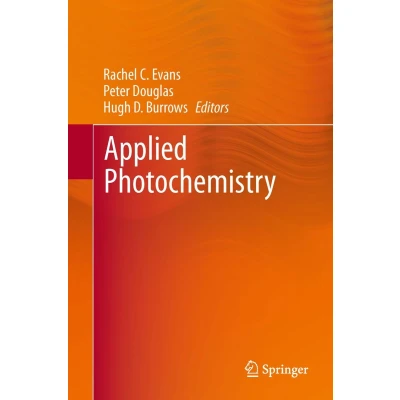
Applied Photochemistry
Uitgelicht

|
91,77 |
Naar shop
|
| VERGELIJK ALLE AANBIEDERS (1) | ||
 Beschrijving
Bol Partner
Important aspects of applied photochemistry in electronics and imaging, through processes such as photolithography, are discussed and it is shown how this is allowing the increasing miniaturisation of semiconductor devices for a widevariety of electronics applications and the development of nanometer scale devices. Applied Photochemistry encompasses the major applications of the chemical effects resulting from light absorption by atoms and molecules in chemistry, physics, medicine and engineering, and contains contributions from specialists in these key areas. Particular emphasis is placed both on how photochemistry contributes to these disciplines and on what the current developments are.The book starts with a general description of the interaction between light and matter, which provides the general background to photochemistry for non-specialists. The following chapters develop the general synthetic and mechanistic aspects of photochemistry as applied to both organic and inorganic materials, together with types of materials which are useful as light absorbers, emitters, sensitisers, etc. for a wide variety of applications. A detailed discussion is presented on the photochemical processes occurring in the Earth’s atmosphere, including discussion of important current aspects such as ozone depletion. Two important distinct, but interconnected, applications of photochemistry are in photocatalytic treatment of wastes and in solar energy conversion. Semiconductor photochemistry plays an important role in these and is discussed with reference to both of these areas. Free radicals and reactive oxygen species are of major importance in many chemical, biological and medical applications of photochemistry, and are discussed in depth. The following chapters discuss the relevance of using light in medicine, both with various types of phototherapy and in medical diagnostics. The development of optical sensors and probes is closely related to diagnostics, but is also relevant to many other applications, and is discussed separately. Important aspects of applied photochemistry in electronics and imaging, through processes such as photolithography, are discussed and it is shown how this is allowing the increasing miniaturisation of semiconductor devices for a widevariety of electronics applications and the development of nanometer scale devices. The final two chapters provide the basic ideas necessary to set up a photochemical laboratory and to characterise excited states. This book is aimed at those in science, engineering and medicine who are interested in applying photochemistry in a broad spectrum of areas. Each chapter has the basic theories and methods for its particular applications and directs the reader to the current, important literature in the field, making Applied Photochemistry suitable for both the novice and the experienced photochemist. Applied Photochemistry encompasses the major applications of the chemical effects resulting from light absorption by atoms and molecules in chemistry, physics, medicine and engineering, and contains contributions from specialists in these key areas. Particular emphasis is placed both on how photochemistry contributes to these disciplines and on what the current developments are.The book starts with a general description of the interaction between light and matter, which provides the general background to photochemistry for non-specialists. The following chapters develop the general synthetic and mechanistic aspects of photochemistry as applied to both organic and inorganic materials, together with types of materials which are useful as light absorbers, emitters, sensitisers, etc. for a wide variety of applications. A detailed discussion is presented on the photochemical processes occurring in the Earth’s atmosphere, including discussion of important current aspects such as ozone depletion. Two important distinct, but interconnected, applications of photochemistry are in photocatalytic treatment of wastes and in solar energy conversion. Semiconductor photochemistry plays an important role in these and is discussed with reference to both of these areas. Free radicals and reactive oxygen species are of major importance in many chemical, biological and medical applications of photochemistry, and are discussed in depth. The following chapters discuss the relevance of using light in medicine, both with various types of phototherapy and in medical diagnostics. The development of optical sensors and probes is closely related to diagnostics, but is also relevant to many other applications, and is discussed separately. Important aspects of applied photochemistry in electronics and imaging, through processes such as photolithography, are discussed and it is shown how this is allowing the increasing miniaturisation of semiconductor devices for a widevariety of electronics applications and the development of nanometer scale devices. The final two chapters provide the basic ideas necessary to set up a photochemical laboratory and to characterise excited states. This book is aimed at those in science, engineering and medicine who are interested in applying photochemistry in a broad spectrum of areas. Each chapter has the basic theories and methods for its particular applications and directs the reader to the current, important literature in the field, making Applied Photochemistry suitable for both the novice and the experienced photochemist.


Vergelijk aanbieders (1)

 Beschrijving
(1)
Beschrijving
(1)
Important aspects of applied photochemistry in electronics and imaging, through processes such as photolithography, are discussed and it is shown how this is allowing the increasing miniaturisation of semiconductor devices for a widevariety of electronics applications and the development of nanometer scale devices. Applied Photochemistry encompasses the major applications of the chemical effects resulting from light absorption by atoms and molecules in chemistry, physics, medicine and engineering, and contains contributions from specialists in these key areas. Particular emphasis is placed both on how photochemistry contributes to these disciplines and on what the current developments are.The book starts with a general description of the interaction between light and matter, which provides the general background to photochemistry for non-specialists. The following chapters develop the general synthetic and mechanistic aspects of photochemistry as applied to both organic and inorganic materials, together with types of materials which are useful as light absorbers, emitters, sensitisers, etc. for a wide variety of applications. A detailed discussion is presented on the photochemical processes occurring in the Earth’s atmosphere, including discussion of important current aspects such as ozone depletion. Two important distinct, but interconnected, applications of photochemistry are in photocatalytic treatment of wastes and in solar energy conversion. Semiconductor photochemistry plays an important role in these and is discussed with reference to both of these areas. Free radicals and reactive oxygen species are of major importance in many chemical, biological and medical applications of photochemistry, and are discussed in depth. The following chapters discuss the relevance of using light in medicine, both with various types of phototherapy and in medical diagnostics. The development of optical sensors and probes is closely related to diagnostics, but is also relevant to many other applications, and is discussed separately. Important aspects of applied photochemistry in electronics and imaging, through processes such as photolithography, are discussed and it is shown how this is allowing the increasing miniaturisation of semiconductor devices for a widevariety of electronics applications and the development of nanometer scale devices. The final two chapters provide the basic ideas necessary to set up a photochemical laboratory and to characterise excited states. This book is aimed at those in science, engineering and medicine who are interested in applying photochemistry in a broad spectrum of areas. Each chapter has the basic theories and methods for its particular applications and directs the reader to the current, important literature in the field, making Applied Photochemistry suitable for both the novice and the experienced photochemist. Applied Photochemistry encompasses the major applications of the chemical effects resulting from light absorption by atoms and molecules in chemistry, physics, medicine and engineering, and contains contributions from specialists in these key areas. Particular emphasis is placed both on how photochemistry contributes to these disciplines and on what the current developments are.The book starts with a general description of the interaction between light and matter, which provides the general background to photochemistry for non-specialists. The following chapters develop the general synthetic and mechanistic aspects of photochemistry as applied to both organic and inorganic materials, together with types of materials which are useful as light absorbers, emitters, sensitisers, etc. for a wide variety of applications. A detailed discussion is presented on the photochemical processes occurring in the Earth’s atmosphere, including discussion of important current aspects such as ozone depletion. Two important distinct, but interconnected, applications of photochemistry are in photocatalytic treatment of wastes and in solar energy conversion. Semiconductor photochemistry plays an important role in these and is discussed with reference to both of these areas. Free radicals and reactive oxygen species are of major importance in many chemical, biological and medical applications of photochemistry, and are discussed in depth. The following chapters discuss the relevance of using light in medicine, both with various types of phototherapy and in medical diagnostics. The development of optical sensors and probes is closely related to diagnostics, but is also relevant to many other applications, and is discussed separately. Important aspects of applied photochemistry in electronics and imaging, through processes such as photolithography, are discussed and it is shown how this is allowing the increasing miniaturisation of semiconductor devices for a widevariety of electronics applications and the development of nanometer scale devices. The final two chapters provide the basic ideas necessary to set up a photochemical laboratory and to characterise excited states. This book is aimed at those in science, engineering and medicine who are interested in applying photochemistry in a broad spectrum of areas. Each chapter has the basic theories and methods for its particular applications and directs the reader to the current, important literature in the field, making Applied Photochemistry suitable for both the novice and the experienced photochemist.
 Productspecificaties
| EAN |
|
|---|---|
| Maat |
|
 Prijshistorie
Prijzen voor het laatst bijgewerkt op:
 Gerelateerde resultaten


