
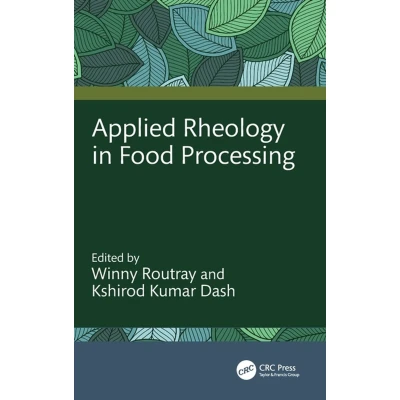
Applied Rheology in Food Processing
Uitgelicht

|
205,00 |
Naar shop
|

|
243,80 |
Naar shop
|

|
243,80 |
Naar shop
|
| VERGELIJK ALLE AANBIEDERS (3) | ||
 Beschrijving
Bol
This book acts as a guide to learn about the various rheological behavior of the food, including starch suspensions, dairy products, meat products, fruits and vegetables, packaging materials, associated nanoparticles, and other aspects. It discusses the rheological properties in terms of the categories of various food. This book acts as a guide to learn about the various rheological behaviors of food, including starch suspensions, dairy products, meat products, fruits and vegetables, packaging materials, associated nanoparticles, and other aspects. It discusses the rheological properties of the categories of various foods, highlighting variation in properties in terms of differences in composition within the same category. It provides insight into the advanced modeling and experimentation techniques being employed for the assessment and development of requisite food rheology. Discusses the effects of nanotechnology on the rheological properties Details the more precise and advanced food processing technologies in use, including variation in rheology with the changing fusion cuisines Illustrates various food components playing a major role in the popularity of modern products Reviews factors affecting technology transfer from lab to industry This book is aimed at graduate students and researchers in food and chemical engineering.


 Beschrijving
(1)
Beschrijving
(1)
This book acts as a guide to learn about the various rheological behavior of the food, including starch suspensions, dairy products, meat products, fruits and vegetables, packaging materials, associated nanoparticles, and other aspects. It discusses the rheological properties in terms of the categories of various food. This book acts as a guide to learn about the various rheological behaviors of food, including starch suspensions, dairy products, meat products, fruits and vegetables, packaging materials, associated nanoparticles, and other aspects. It discusses the rheological properties of the categories of various foods, highlighting variation in properties in terms of differences in composition within the same category. It provides insight into the advanced modeling and experimentation techniques being employed for the assessment and development of requisite food rheology. Discusses the effects of nanotechnology on the rheological properties Details the more precise and advanced food processing technologies in use, including variation in rheology with the changing fusion cuisines Illustrates various food components playing a major role in the popularity of modern products Reviews factors affecting technology transfer from lab to industry This book is aimed at graduate students and researchers in food and chemical engineering.
 Productspecificaties
 Prijshistorie
* Prijshistorie bevat geen data van Amazon, Amazon Marketplace.
Prijzen voor het laatst bijgewerkt op:
 Gerelateerde resultaten


