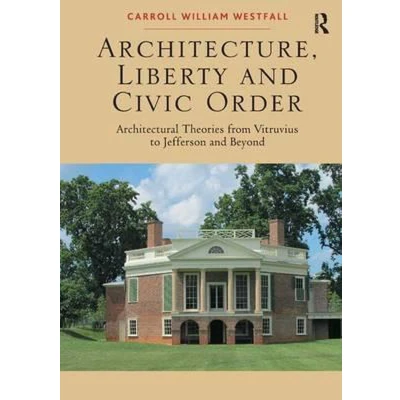

Architecture, Liberty and Civic Order

Prijzen vanaf
63,85

Uitgelicht

VERGELIJK ALLE AANBIEDERS (2)

Beschrijving

Bol Partner This book stresses the importance of restoring traditional practices so that we can build beautiful and sustainable cities and districts that will assist citizens in living abundantly and well. This book brings to light central topics that are neglected in current histories and theories of architecture and urbanism. These include the role of imitation in earlier centuries and its potential role in present practice; the necessary relationship between architecture, urbanism and the rural districts; and their counterpart in the civil order that builds and uses what is built. The narrative traces two models for the practice of architecture. One follows the ancient model in which the architect renders his service to serve the interests of others; it survives and is dominant in modernism. The other, first formulated in the fifteenth century by Leon Battista Alberti, has the architect use his talent in coordination with others to contribute to the common good of a republican civil order that seeks to protect its own liberty and that of its citizens. Palladio practiced this way, and so did Thomas Jefferson when he founded a uniquely American architecture, the counterpart to the nation’s founding. This narrative gives particular emphasis to the contrasting developments in architecture on the opposite sides of the English Channel. The book presents the value for clients and architects today and in the future of drawing on history and tradition. It stresses the importance, indeed, the urgency, of restoring traditional practices so that we can build just, beautiful, and sustainable cities and rural districts that will once again assist citizens in living not only abundantly but also well as they pursue their happiness.

Vergelijk aanbieders (2)

Shop
Prijs
Verzendkosten
Totale prijs
63,85
Gratis
63,85
Naar shop
Gratis Shipping Costs
157,97
gebruikt
Gratis
157,97
Naar shop
Gratis Shipping Costs
Beschrijving (2)
Bol Partner

This book stresses the importance of restoring traditional practices so that we can build beautiful and sustainable cities and districts that will assist citizens in living abundantly and well. This book brings to light central topics that are neglected in current histories and theories of architecture and urbanism. These include the role of imitation in earlier centuries and its potential role in present practice; the necessary relationship between architecture, urbanism and the rural districts; and their counterpart in the civil order that builds and uses what is built. The narrative traces two models for the practice of architecture. One follows the ancient model in which the architect renders his service to serve the interests of others; it survives and is dominant in modernism. The other, first formulated in the fifteenth century by Leon Battista Alberti, has the architect use his talent in coordination with others to contribute to the common good of a republican civil order that seeks to protect its own liberty and that of its citizens. Palladio practiced this way, and so did Thomas Jefferson when he founded a uniquely American architecture, the counterpart to the nation’s founding. This narrative gives particular emphasis to the contrasting developments in architecture on the opposite sides of the English Channel. The book presents the value for clients and architects today and in the future of drawing on history and tradition. It stresses the importance, indeed, the urgency, of restoring traditional practices so that we can build just, beautiful, and sustainable cities and rural districts that will once again assist citizens in living not only abundantly but also well as they pursue their happiness.

Bol

This book brings to light central topics that are neglected in current histories and theories of architecture and urbanism. These include the role of imitation in earlier centuries and its potential role in present practice; the necessary relationship between architecture, urbanism and the rural districts; and their counterpart in the civil order that builds and uses what is built. The narrative traces two models for the practice of architecture. One follows the ancient model in which the architect renders his service to serve the interests of others; it survives and is dominant in modernism. The other, first formulated in the fifteenth century by Leon Battista Alberti, has the architect use his talent in coordination with others to contribute to the common good of a republican civil order that seeks to protect its own liberty and that of its citizens. Palladio practiced this way, and so did Thomas Jefferson when he founded a uniquely American architecture, the counterpart to the nation’s founding. This narrative gives particular emphasis to the contrasting developments in architecture on the opposite sides of the English Channel. The book presents the value for clients and architects today and in the future of drawing on history and tradition. It stresses the importance, indeed, the urgency, of restoring traditional practices so that we can build just, beautiful, and sustainable cities and rural districts that will once again assist citizens in living not only abundantly but also well as they pursue their happiness.


Productspecificaties

EAN
  • 9781317178989
  • 9781472456533
Maat

Prijzen voor het laatst bijgewerkt op:

Uitgelichte Keuze
63,85
Naar shop
