


€ 98,85 € 78,55 Gratis verzending

Uitgelicht
|
|
98,85
78,55 |
Naar shop
|
| VERGELIJK ALLE AANBIEDERS (1) | ||
 Beschrijving
Vergelijk aanbieders (1)
€ 98,85 € 78,55 Gratis verzending
Winkels met andere maten
Beschrijving
(1)
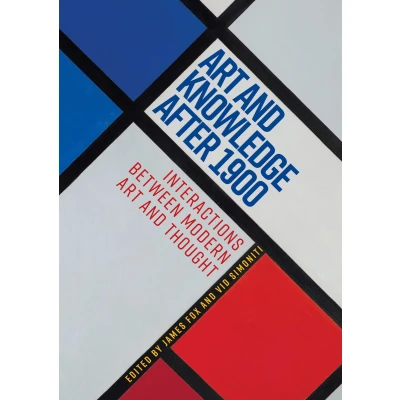
This book explores the relationship between art and various disciplines of knowledge from the beginning of the twentieth century to the present day. This book explores the relationship between visual artists and various disciplines of knowledge from the beginning of the twentieth century to the present day.The chapters gathered here show how scientific and spiritual theories informed the evolution of abstraction, how psychoanalysis influenced the meanings and methods of Surrealism, and how in the second half of the century artists made increasingly frequent and sophisticated incursions into academic practices, includinghistory, philosophy, economics, cybernetics, sociology, ecology, biotechnology and archival research. These dialogues foreshadowed and helped form the now ubiquitous figure of the contemporary interdisciplinary artist.In investigating the myriad points at which art and other fields of knowledge met and conversed, the book offers a re-reading of key moments in the art of the last century, as well as presenting pioneering research into less-explored movements. Throughout, it poses a series of larger questions: is art a source of knowledge? If so, what kind of knowledge? And, ultimately, can it contribute to our understanding of the world in ways that other thinkers should take seriously?A rigorous and coherent new history of modern art, Art and knowledge after 1900 charts a hitherto-unnoticed trajectory from the early avant-gardes to the interdisciplinary art of today. This ground-breaking new history of modern art explores the relationship between art and knowledge from the beginning of the twentieth century to the present day. Each chapter examines artistic responses to a particular discipline of knowledge, from quantum theory and theosophy to cybernetics and ethnic futurisms. The authors argue that art’s incursion into other intellectual disciplines is a defining characteristic of both modernism and postmodernism. Throughout, the volume poses a series of larger questions: is art a source of knowledge? If so, what kind of knowledge? And, ultimately, can it contribute to our understanding of the world in ways that thinkers from other fields should take seriously?
 Productspecificaties
| EAN |
|
|---|---|
| Maat |
|
 Prijshistorie
 Prijzen voor het laatst bijgewerkt op:
 Gerelateerde resultaten


