


€ 29,99 Gratis verzending

Uitgelicht
|
|
29,99 |
Naar shop
|

|
32,04 |
Naar shop
|

|
32,04 |
Naar shop
|
| VERGELIJK ALLE AANBIEDERS (3) | ||
 Beschrijving
Vergelijk aanbieders (3)
€ 29,99 Gratis verzending
€ 32,04 Gratis verzending
€ 32,04 Gratis verzending
Winkels met andere maten
Beschrijving
(1)
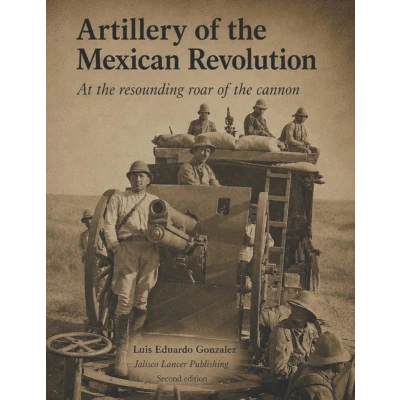
Since the War of Independence, Mexico lacked a unified, standardized, and modern artillery branch. Logistical deficiencies emerged as guns remained stationed in distant garrisons and plazas, often with insufficient ammunition and powder stocks or mismatched calibers relative to the artillery pieces. The country's diverse and rugged terrain further complicated the strategic redeployment of artillery units between defensive and offensive positions. During the administration of General Porfirio Díaz (1873-1911), the Mexican military and senior cabinet officials exhibited pronounced divisions along pro-French and pro-German lines. For instance, General Bernardo Reyes, an influential political figure and Secretary of War with strong prospects as Díaz's successor, actively promoted the adoption of German-manufactured ordnance. In contrast, José Yves Limantour, Finance Secretary and architect of fiscal stabilization, supported procurement from French artillery manufacturers, emphasizing alignment with financial and industrial interests. This work presents a detailed chronicle of the modernization and incremental upgrades of the Mexican artillery branch, analyzing the adoption of specific cannon models and the operational adaptations implemented across successive stages of the Mexican Revolution. It emphasizes technical developments, logistical considerations, and doctrinal shifts influencing artillery deployment and maintenance throughout the period.
 Prijshistorie
 * Prijshistorie bevat geen data van Amazon, Amazon Marketplace.
Prijzen voor het laatst bijgewerkt op:
 Gerelateerde resultaten
 Productspecificaties


