


€ 52,99 Gratis verzending

Uitgelicht
|
|
52,99 |
Naar shop
|
| VERGELIJK ALLE AANBIEDERS (1) | ||
 Beschrijving
Vergelijk aanbieders (1)
€ 52,99 Gratis verzending
Winkels met andere maten
Beschrijving
(1)
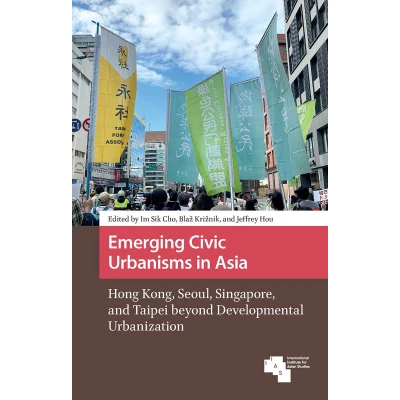
The contributions in this volume provide critical insights into how the changing state–civil society relationship affects the recent surge of civic urbanism in Hong Kong, Seoul, Singapore, and Taipei. In parts of Asia, citizens are increasingly involved in shaping their neighbourhoods and cities, representing a significant departure from earlier state-led or market-driven urban development. These emerging civic urbanisms are a result of an evolving relationship between the state and civil society. The contributions in this volume provide critical insights into how the changing state–civil society relationship affects the recent surge of civic urbanism in Hong Kong, Seoul, Singapore, and Taipei, and the authors present eighteen cases of grassroots activism and resistance, collaboration and placemaking, neighbourhood community building, and self-organization and commoning in these cities. Exploring how citizen participation and state–civil society partnerships contribute to more resilient and participatory neighbourhoods and cities, the authors use the concept of civic urbanisms not only as a conceptual framework to understand the ongoing social and urban change but as an aspirational model of urban governance for cities in Asia and beyond.
 Productspecificaties
| EAN |
|
|---|---|
| Maat |
|
 Prijshistorie
 Prijzen voor het laatst bijgewerkt op:
 Gerelateerde resultaten


