
Assessment, Repair and Strengthening for the Conservation of Structures Finite Element Analysis Building Assessment

Prijzen vanaf
100,16

Uitgelicht

VERGELIJK ALLE AANBIEDERS (2)

Beschrijving

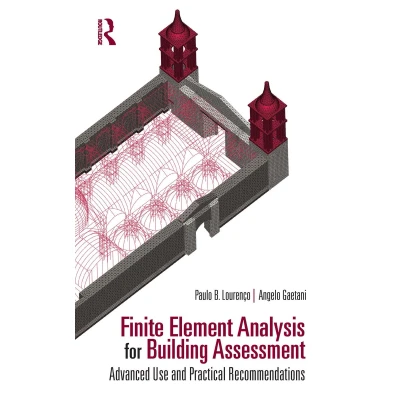
Bol Partner This presents the Finite Element Method, outlining nonlinearities in computational terms. It advises the material properties to be adopted in the analyses, and is illustrated with cases studies of existing buildings. For students with a background in structural engineering, and professionals. Existing structures represent a heterogeneous category in the global built environment as often characterized by the presence of archaic materials, damage and disconnections, uncommon construction techniques and subsequent interventions throughout the building history. In this scenario, the common linear elastic analysis approach adopted for new buildings is incapable of an accurate estimation of structural capacity, leading to overconservative results, invasive structural strengthening, added intervention costs, excessive interference to building users and possible losses in terms of aesthetics or heritage values. For a rational and sustainable use of the resources, this book deals with advanced numerical simulations, adopting a practical approach to introduce the fundamentals of Finite Element Method, nonlinear solution procedures and constitutive material models. Recommended material properties for masonry, timber, reinforced concrete, iron and steel are discussed according to experimental evidence, building standards and codes of practice. The examples examined throughout the book and in the conclusive chapter support the analyst’s decision-making process toward a safe and efficient use of finite element analysis. Written primarily for practicing engineers, the book is of value to students in engineering and technical architecture with solid knowledge in the field of continuum mechanics and structural design.

Vergelijk aanbieders (2)

Shop
Prijs
Verzendkosten
Totale prijs
100,16
Gratis
100,16
Naar shop
Gratis Shipping Costs
129,84
Gratis
129,84
Naar shop
Gratis Shipping Costs
Beschrijving (2)
Bol Partner

This presents the Finite Element Method, outlining nonlinearities in computational terms. It advises the material properties to be adopted in the analyses, and is illustrated with cases studies of existing buildings. For students with a background in structural engineering, and professionals. Existing structures represent a heterogeneous category in the global built environment as often characterized by the presence of archaic materials, damage and disconnections, uncommon construction techniques and subsequent interventions throughout the building history. In this scenario, the common linear elastic analysis approach adopted for new buildings is incapable of an accurate estimation of structural capacity, leading to overconservative results, invasive structural strengthening, added intervention costs, excessive interference to building users and possible losses in terms of aesthetics or heritage values. For a rational and sustainable use of the resources, this book deals with advanced numerical simulations, adopting a practical approach to introduce the fundamentals of Finite Element Method, nonlinear solution procedures and constitutive material models. Recommended material properties for masonry, timber, reinforced concrete, iron and steel are discussed according to experimental evidence, building standards and codes of practice. The examples examined throughout the book and in the conclusive chapter support the analyst’s decision-making process toward a safe and efficient use of finite element analysis. Written primarily for practicing engineers, the book is of value to students in engineering and technical architecture with solid knowledge in the field of continuum mechanics and structural design.

Bol

Existing structures represent a heterogeneous category in the global built environment as often characterized by the presence of archaic materials, damage and disconnections, uncommon construction techniques and subsequent interventions throughout the building history. In this scenario, the common linear elastic analysis approach adopted for new buildings is incapable of an accurate estimation of structural capacity, leading to overconservative results, invasive structural strengthening, added intervention costs, excessive interference to building users and possible losses in terms of aesthetics or heritage values. For a rational and sustainable use of the resources, this book deals with advanced numerical simulations, adopting a practical approach to introduce the fundamentals of Finite Element Method, nonlinear solution procedures and constitutive material models. Recommended material properties for masonry, timber, reinforced concrete, iron and steel are discussed according to experimental evidence, building standards and codes of practice. The examples examined throughout the book and in the conclusive chapter support the analyst’s decision-making process toward a safe and efficient use of finite element analysis. Written primarily for practicing engineers, the book is of value to students in engineering and technical architecture with solid knowledge in the field of continuum mechanics and structural design.


Productspecificaties

EAN
  • 9781000563146
  • 9781032228396
Maat


Prijshistorie

Prijzen voor het laatst bijgewerkt op:

Uitgelichte Keuze
100,16
Naar shop
