


€ 30,99 Gratis verzending

Uitgelicht
|
|
30,99 |
Naar shop
|

|
41,56 |
Naar shop
|
| VERGELIJK ALLE AANBIEDERS (2) | ||
 Beschrijving
Vergelijk aanbieders (2)
€ 30,99 Gratis verzending
€ 41,56 Gratis verzending
Winkels met andere maten
Beschrijving
(1)
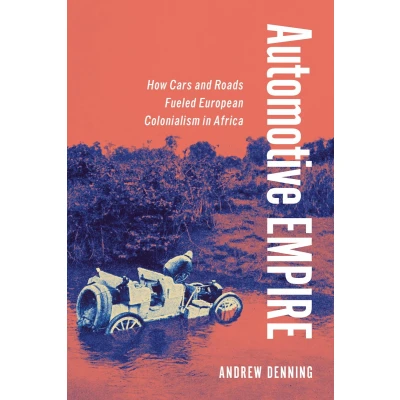
Winner of the 2025 Nicolas-Joseph Cugnot Award In Automotive Empire, Andrew Denning uncovers how roads and vehicles began to transform colonial societies across Africa but rarely in the manner Europeans expected. Like seafaring ships and railroads, automobiles and roads were more than a mode of transport – they organized colonial spaces and structured the political, economic, and social relations of empire, both within African colonies and between colonies and the European metropole. European officials in French, Italian, British, German, Belgian, and Portuguese territories in Africa shared a common challenge – the transport problem. While they imagined that roads would radiate commerce and political hegemony by collapsing space, the pressures of constructing and maintaining roads rendered colonial administration thin, ineffective, and capricious. Automotive empire emerged as the European solution to the transport problem, but revealed weakness as much as it extended power. As Automotive Empire reveals, motor vehicles and roads seemed the ideal solution to the colonial transport problem. They were cheaper and quicker to construct than railroads, overcame the environmental limitations of rivers, and did not depend on the recruitment and supervision of African porters. At this pivotal moment of African colonialism, when European powers transitioned from claiming territories to administering and exploiting them, automotive empire defined colonial states and societies, along with the brutal and capricious nature of European colonialism itself.
 Prijshistorie
 * Prijshistorie bevat geen data van Amazon.
Prijzen voor het laatst bijgewerkt op:
 Gerelateerde resultaten
 Productspecificaties


