


€ 10,00 € 2,99 verzendkosten Totaal € 12,99

Gesponsorde links
|
|
10,00 |
Naar shop
|

|
10,69 |
Naar shop
|
| VERGELIJK ALLE AANBIEDERS (2) | ||
 Beschrijving
Vergelijk aanbieders (2)
Gesponsorde links · Sommige shops betalen ons een vergoeding
€ 10,00 € 2,99 verzendkosten Totaal € 12,99
€ 10,69 Gratis verzending
Winkels met andere maten
Beschrijving
(1)
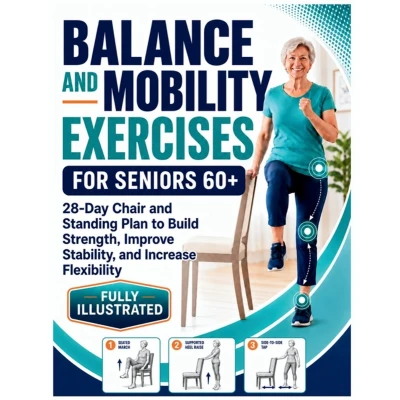
The mistake isn't losing your balance. It's assuming you'll get a warning before you do.There usually is one. It just doesn't look like a warning. It looks like gripping the counter a little tighter than you used to, or waiting a beat on the couch before you trust your own legs enough to stand up. Nobody else notices. You do, every time.Most exercise books built for this moment hand you a floor routine and hope you show up. This one never puts you on the floor. Not once.Inside, you'll find: - The Three-Level Test. A way to tell, in under a minute, whether you should be holding on with both hands, one hand, or barely touching anything at all.- Why Skip the Floor. The specific reason this whole method works from a chair, a wall, or the counter in your kitchen, and nothing else.- The Day-One Check. A short starting point you record before you begin, so later on you have something real to compare against instead of a guess.- A Turn Most Avoid. A way to change direction in a hallway or kitchen without grabbing for the nearest thing to catch you.- What Ready Feels Like. The actual signal that tells you it's time to let go of the counter, not somebody else's opinion about your age.- The Ten-Minute Question. How a plan built on ten minutes a day is supposed to add up to anything, and why that's the part that actually works.Nothing here promises to turn back the clock, and it won't pretend to. But there's a real difference between quietly avoiding stairs and counters, and moving through your own house like your legs still belong to you. That difference gets built ten minutes at a time. It starts wherever you actually are right now, not where you think you should be.Your chair is already in the room. Get your copy and put it to work today.
 Prijshistorie
* Prijshistorie bevat geen data van Amazon.
Prijzen voor het laatst bijgewerkt op:
 Gerelateerde resultaten
 Productspecificaties


