

€ 18,33 Gratis verzending

Gesponsorde links
|
|
18,33 |
Naar shop
|

|
18,33 |
Naar shop
|

|
26,99 |
Naar shop
|
| VERGELIJK ALLE AANBIEDERS (3) | ||
 Beschrijving
Vergelijk aanbieders (3)
Gesponsorde links · Sommige shops betalen ons een vergoeding
€ 18,33 Gratis verzending
€ 18,33 Gratis verzending
€ 26,99 Gratis verzending
Winkels met andere maten
Beschrijving
(1)
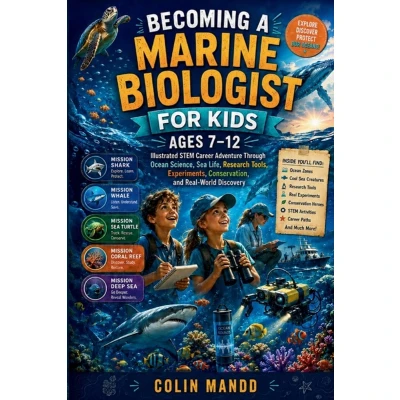
What if your child could dive beneath the waves, investigate sharks, follow migrating whales, explore coral reefs, and discover what it really takes to become a marine biologist? Becoming a Marine Biologist for Kids Ages 7-12 turns ocean science into an unforgettable journey of discovery, giving curious young readers a front-row seat to the fascinating world of marine biology. Many children are fascinated by sharks, whales, sea turtles, coral reefs, and the mysteries of the deep ocean, yet most science books either offer scattered facts or explain the subject in a way that feels too technical. Young readers need something that answers their biggest questions while showing them how real marine scientists observe animals, collect evidence, use technology, solve mysteries, protect habitats, and build carriers around their love of the ocean This richly illustrated STEM adventure brings marine biology to life through clear explorations, exciting scientific missions, colorful visual learning, real-world research methods, and fascinating encounters with ocean life. Readers will journey through Mission Shark, Mission Whale, Mission Sea Turtle, Mission Coral Reef, and Mission Deep Sea, while discovering ocean zones, food webs, animal adaptations, migration, conservation, research vessels, underwater robots, hydrophones, satellite tags, eDNA, microscopes, sampling equipment, and much more. Rather than reading like a traditional textbook, every section encourages children to observe, question, investigate, compare evidence, and think like real marine biologists. Benefits: - Discover incredible marine animals and understand how they survive, communicate, migrate, feed, and interact. - Explore real marine science tools including ROVs, microscopes, hydrophones, tagging technology, sensors, and research equipment.- Take part in exciting ocean missions involving sharks, whales, sea turtles, coral reefs, and the mysterious deep sea. - Understand ocean habitats and ecosystems, from colorful coral reefs and mangroves to kelp forests, seagrass means, polar seas, and the darkest ocean depths. - Build STEM thinking skills through observation, evidence, measures, patterns, data, scientific questions, and problem solving.- Learn why conservation matters and discover how scientists help protect wildlife and damaged marine habitats.- Explore real ocean carriers including marine biologist, oceanographer, coral reef ecologist, marine mammal scientist, ROV pilot, aquarium scientist, conservation specialist, and science communicator.- Most importantly, young readers will discover that becoming a scientist begins long before adolescent. It begins with curiosity, careful observation, kindness toward nature, and the courage to keep asking questions. >Dive in today and give your young explorer an inspiring journey through ocean science, marine life, discovery, conservation, and the exciting possibilities of a future beneath the waves.
 Prijshistorie
* Prijshistorie bevat geen data van Amazon, Amazon Marketplace.
Prijzen voor het laatst bijgewerkt op:
 Gerelateerde resultaten
 Productspecificaties


