








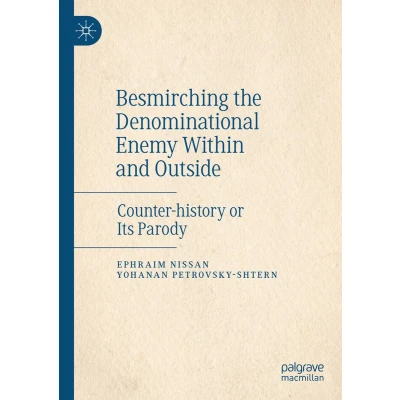
Besmirching the Denominational Enemy Within and Outside: Counter history or Its Parody
Uitgelicht

|
99,99 |
Naar shop
|
 Beschrijving
Bol
Counter-hagiography and counter-biography besmirch foundational figures held dear by different religious, political, or social groups. The reputation of the great Haskalah (Jewish Enlightenment) thinker Moses Mendelssohn was damaged among the Orthodox by how Haskalah extremists portrayed him in their image. Counter-hagiography and counter-biography besmirch foundational figures held dear by different religious, political, or social groups. Such phenomena figure prominently in the history of religion and conflicts. For example, what we know of the Mazdakite revolution in pre-Islamic Iran/Iraq comes from revilers. The anti-Judaic polemicist from ninth-century Afghanistan and Iraq, Hiwi (“Snake”), was actually called Ḥəyyāwī (still a name among Iraqi Jews). The reputation of the great Haskalah (Jewish Enlightenment) thinker Moses Mendelssohn was damaged among the Orthodox by how Haskalah extremists portrayed him in their image. In 1869, a Genoan politician, Cesare Cabella, fulminated against Esther and Mordecai. In the Letter of Haman in rabbinic homiletics, Jews parodized hostile representations of their sacred history. Gerson Rosenzweig parroted in his 1892 talmudic-style Tractate America, anti-immigrant rhetoric from New York newspapers. Roman-age rabbis responded to claims about the protagonist of the Book of Joshua, “Joshua the Robber” as per a North African inscription early Byzantine Procopius of Caesarea alleged to have seen. Counter-hagiography and counter-biography besmirch foundational figures held dear by different religious, political, or social groups. Such phenomena figure prominently in the history of religion and conflicts. For example, what we know of the Mazdakite revolution in pre-Islamic Iran/Iraq comes from revilers. The anti-Judaic polemicist from ninth-century Afghanistan and Iraq, Hiwi (“Snake”), was actually called Ḥəyyāwī (still a name among Iraqi Jews). The reputation of the great Haskalah (Jewish Enlightenment) thinker Moses Mendelssohn was damaged among the Orthodox by how Haskalah extremists portrayed him in their image. In 1869, a Genoan politician, Cesare Cabella, fulminated against Esther and Mordecai. In the Letter of Haman in rabbinic homiletics, Jews parodized hostile representations of their sacred history. Gerson Rosenzweig parroted in his 1892 talmudic-style Tractate America, anti-immigrant rhetoric from New York newspapers. Roman-age rabbis responded to claims about the protagonist of the Book of Joshua, “Joshua the Robber” as per a North African inscription early Byzantine Procopius of Caesarea alleged to have seen.


Vergelijk aanbieders (1)

 Beschrijving
(1)
Beschrijving
(1)
Counter-hagiography and counter-biography besmirch foundational figures held dear by different religious, political, or social groups. The reputation of the great Haskalah (Jewish Enlightenment) thinker Moses Mendelssohn was damaged among the Orthodox by how Haskalah extremists portrayed him in their image. Counter-hagiography and counter-biography besmirch foundational figures held dear by different religious, political, or social groups. Such phenomena figure prominently in the history of religion and conflicts. For example, what we know of the Mazdakite revolution in pre-Islamic Iran/Iraq comes from revilers. The anti-Judaic polemicist from ninth-century Afghanistan and Iraq, Hiwi (“Snake”), was actually called Ḥəyyāwī (still a name among Iraqi Jews). The reputation of the great Haskalah (Jewish Enlightenment) thinker Moses Mendelssohn was damaged among the Orthodox by how Haskalah extremists portrayed him in their image. In 1869, a Genoan politician, Cesare Cabella, fulminated against Esther and Mordecai. In the Letter of Haman in rabbinic homiletics, Jews parodized hostile representations of their sacred history. Gerson Rosenzweig parroted in his 1892 talmudic-style Tractate America, anti-immigrant rhetoric from New York newspapers. Roman-age rabbis responded to claims about the protagonist of the Book of Joshua, “Joshua the Robber” as per a North African inscription early Byzantine Procopius of Caesarea alleged to have seen. Counter-hagiography and counter-biography besmirch foundational figures held dear by different religious, political, or social groups. Such phenomena figure prominently in the history of religion and conflicts. For example, what we know of the Mazdakite revolution in pre-Islamic Iran/Iraq comes from revilers. The anti-Judaic polemicist from ninth-century Afghanistan and Iraq, Hiwi (“Snake”), was actually called Ḥəyyāwī (still a name among Iraqi Jews). The reputation of the great Haskalah (Jewish Enlightenment) thinker Moses Mendelssohn was damaged among the Orthodox by how Haskalah extremists portrayed him in their image. In 1869, a Genoan politician, Cesare Cabella, fulminated against Esther and Mordecai. In the Letter of Haman in rabbinic homiletics, Jews parodized hostile representations of their sacred history. Gerson Rosenzweig parroted in his 1892 talmudic-style Tractate America, anti-immigrant rhetoric from New York newspapers. Roman-age rabbis responded to claims about the protagonist of the Book of Joshua, “Joshua the Robber” as per a North African inscription early Byzantine Procopius of Caesarea alleged to have seen.
 Productspecificaties
| EAN |
|
|---|---|
| Maat |
|
 Prijshistorie
Prijzen voor het laatst bijgewerkt op:
 Gerelateerde resultaten


