


€ 60,99 Gratis verzending

Uitgelicht
|
|
60,99 |
Naar shop
|

|
67,71 |
Naar shop
|
| VERGELIJK ALLE AANBIEDERS (2) | ||
 Beschrijving
Vergelijk aanbieders (2)
€ 60,99 Gratis verzending
€ 67,71 Gratis verzending
Winkels met andere maten
Beschrijving
(1)
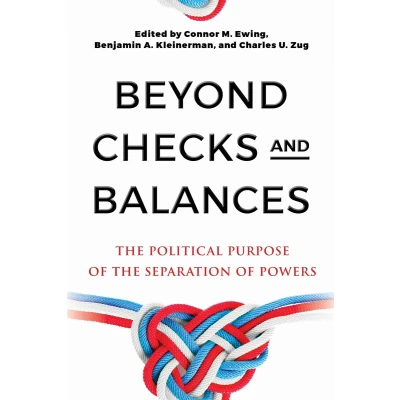
An argument for understanding the separation of powers as a political arrangement designed to pursue the common democratic goodBeyond Checks and Balances seeks to rescue the democratic concept of the separation of powers from a popular caricature of it: that checks and balances exist between branches of government to frustrate, slow, and inhibit change. Long regarded as a legal doctrine that must be adjudicated by the federal courts, political scientists Connor M. Ewing, Benjamin A. Kleinerman, and Charles U. Zug have gathered leading scholars' analyses into a volume that argues that the separation of powers is instead best understood politically. When cast as a configuration of powers, incentives, and institutions designed to pursue the foundational ends of politics, it becomes clear that separation of powers does not exist to stymie collective action, though it certainly is capable of doing so.The book is divided into two sections: the first examines the foundations of statement-of-powers doctrine and thought. The second set of chapters analyzes the application of the doctrine and addresses more specific topics, such as the power to declare war, the scope of executive powers, and the impeachment of federal judges. The contributors spotlight the substantive constitutional goodsthat the arrangement commonly referred to as the separation of powers is designed to achieve. The collection shows that—as a concept dedicated to creating collaborative, good democratic government—the separation of powers includes, but cannot be reduced to, constraints on governmental power. By incentivizing conflict and negotiation between different constitutional offices, the separation of powers brings diverse governmental perspectives to bear on the basic problems of politics, promoting political values like deliberation, decisiveness, and inclusion across branches.Contributors: Sotirios A. Barber, Thomas R. Bell, Paul Carrese, Connor M. Ewing, Brigid Flaherty Staab, Benjamin A. Kleinerman, David J. Siemers, George Thomas, Kathleen Tipler, Jeffrey K. Tulis, Keith E. Whittington, Mariah Zeisberg, Charles U. Zug.
 Prijshistorie
 * Prijshistorie bevat geen data van Amazon.
Prijzen voor het laatst bijgewerkt op:
 Gerelateerde resultaten
 Productspecificaties


