


€ 174,00 Gratis verzending

Uitgelicht
|
|
174,00 |
Naar shop
|

|
186,55 |
Naar shop
|

|
186,55 |
Naar shop
|
| VERGELIJK ALLE AANBIEDERS (3) | ||
 Beschrijving
Vergelijk aanbieders (3)
€ 174,00 Gratis verzending
€ 186,55 Gratis verzending
€ 186,55 Gratis verzending
Winkels met andere maten
Beschrijving
(1)
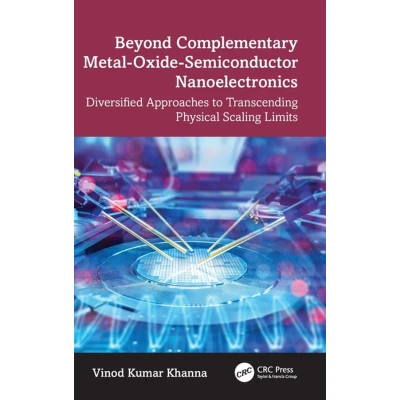
Emerging technologies embrace a wide range of cutting-edge developments aimed at surpassing the physical constraints of traditional Complementary Metal-Oxide-Semiconductor (CMOS) devices. Complementary Metal-Oxide-Semiconductor (CMOS) nanoelectronics are approaching their physical limits, leading to issues such as excessive leakage and increased power consumption. New materials, computing methods, and state variables are being investigated to solve these issues. These emerging technologies embrace a wide range of cutting-edge developments aimed at surpassing the physical constraints of traditional CMOS devices. This research is vital for enabling future computing abilities, particularly in devices that could serve new functions in fields such as artificial intelligence and quantum information processing. Beyond Complementary Metal-Oxide-Semiconductor Nanoelectronics offers an in-depth examination of the challenges associated with conventional CMOS technology, outlining the obstacles and issues encountered with traditional CMOS scaling, including power and energy consumption, as well as variability, and highlighting the necessity for alternative technologies. It presents possible successor technologies to CMOS, including emerging logic devices, memory chips, compute-in-memory architectures, new materials, and integration methods. These technologies leverage alternative physical effects, including spintronics, neuromorphic computing, and quantum phenomena, and introduce novel functionalities to enhance performance. Providing an engaging and clear perspective on the future of nanoelectronics, this book will be a valuable reference for graduate students specializing in electrical engineering, computer engineering, materials science, and physics, as well as for university instructors delivering advanced coursework on nanoelectronics, very large scale integration (VLSI) design, and solid-state devices. Professional engineers and designers in the semiconductor field who wish to stay up to date on new technologies, as well as investigators in nanoelectronics and semiconductor technology, will also find it useful. Explains why conventional CMOS scaling is reaching its physical and technological limits and outlines new approaches necessary to improve performance. Highlights the importance of moving beyond electric-charge-based computing to explore alternative properties such as electron spin, for information storage and processing. Bridges the gap between devices and systems by integrating the core physics and materials science of devices with high-level architectural design and advanced packaging techniques.
 Prijshistorie
 * Prijshistorie bevat geen data van Amazon, Amazon Marketplace.
Prijzen voor het laatst bijgewerkt op:
 Gerelateerde resultaten
 Productspecificaties


