
Beyond the Calorie: Matrix, Metabolism, and Myth of Atwater Factors
Uitgelicht

|
25,71 |
Naar shop
|

|
31,99 |
Naar shop
|

|
31,99 |
Naar shop
|
| VERGELIJK ALLE AANBIEDERS (3) | ||
 Beschrijving
Bol
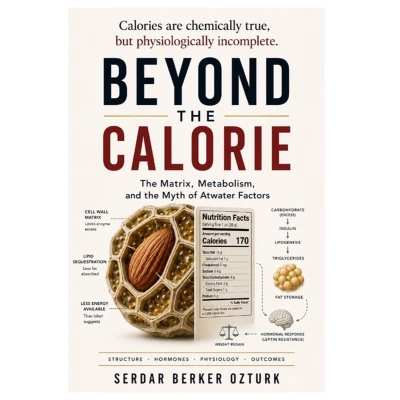
Beyond the Calorie challenges one of the most familiar assumptions in nutrition: that the number printed on a food label fully describes what food will do inside the human body.A calorie is real. Thermodynamics is not in dispute. But the calorie on a label is an estimate, based on conversion factors developed in the nineteenth century. Modern controlled-feeding research shows that this estimate can fail when food structure, digestion, fermentation, thermic cost, hormones, and metabolic adaptation are taken seriously.This book explores why two foods with similar calorie counts can produce different physiological outcomes.It examines: - why whole almonds may deliver less metabolizable energy than their label suggests, - how intact plant cell walls can physically block digestive enzymes, - how beta-glucan and other viscous fibers slow glucose absorption, - why protein, fat, and carbohydrate differ in thermic cost, - why fructose behaves differently from glucose in the liver, - how the Carbohydrate-Insulin Model and Energy Balance Model can be understood as different layers of the same problem, - and why leptin makes weight maintenance a distinct biological challenge from weight loss.This is not a diet book. It offers no meal plans, no promises, and no one-size-fits-all prescription. Instead, it is a science-based explanation of how food structure, nutrient identity, and hormonal regulation shape the body's response to energy.The conclusion is not that calories are irrelevant. The conclusion is more precise: Calories are chemically true, but physiologically incomplete.For readers interested in metabolism, nutrition science, obesity biology, food labeling, and the deeper question of why "a calorie is a calorie" is both true and misleading, Beyond the Calorie offers a clear, evidence-based framework for thinking beyond the number.


 Beschrijving
(1)
Beschrijving
(1)
Beyond the Calorie challenges one of the most familiar assumptions in nutrition: that the number printed on a food label fully describes what food will do inside the human body.A calorie is real. Thermodynamics is not in dispute. But the calorie on a label is an estimate, based on conversion factors developed in the nineteenth century. Modern controlled-feeding research shows that this estimate can fail when food structure, digestion, fermentation, thermic cost, hormones, and metabolic adaptation are taken seriously.This book explores why two foods with similar calorie counts can produce different physiological outcomes.It examines: - why whole almonds may deliver less metabolizable energy than their label suggests, - how intact plant cell walls can physically block digestive enzymes, - how beta-glucan and other viscous fibers slow glucose absorption, - why protein, fat, and carbohydrate differ in thermic cost, - why fructose behaves differently from glucose in the liver, - how the Carbohydrate-Insulin Model and Energy Balance Model can be understood as different layers of the same problem, - and why leptin makes weight maintenance a distinct biological challenge from weight loss.This is not a diet book. It offers no meal plans, no promises, and no one-size-fits-all prescription. Instead, it is a science-based explanation of how food structure, nutrient identity, and hormonal regulation shape the body's response to energy.The conclusion is not that calories are irrelevant. The conclusion is more precise: Calories are chemically true, but physiologically incomplete.For readers interested in metabolism, nutrition science, obesity biology, food labeling, and the deeper question of why "a calorie is a calorie" is both true and misleading, Beyond the Calorie offers a clear, evidence-based framework for thinking beyond the number.
 Productspecificaties
 Prijshistorie
* Prijshistorie bevat geen data van Amazon, Amazon Marketplace.
Prijzen voor het laatst bijgewerkt op:
 Gerelateerde resultaten


