
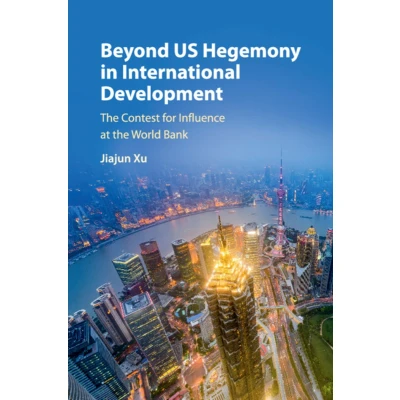
Beyond US Hegemony in International Development
Uitgelicht

|
35,99 |
Naar shop
|
| VERGELIJK ALLE AANBIEDERS (1) | ||
 Beschrijving
Bol
China's initiative to establish the Asian Infrastructure Investment Bank (AIIB), attracting membership from G7 countries against the vocal opposition of the United States, has been recognised as a significant moment in an ongoing hegemonic transition. This book examines how power transitions have played out in the World Bank over the last five decades, offering the first authentic account of the international diplomacy behind donor financing of the World Bank's International Development Association (IDA). Jiajun Xu decodes how the United States amplified its influence at the World Bank despite its flagging financial contributions to IDA. She further demonstrates that the widening influence-to-contribution disparity provoked other donors into taking 'exit/voice' measures, contesting the hegemon's legitimacy. A rising China initially decided to become an IDA donor, seeking influence from within. However, the entrenched hegemonic position of the United States in World Bank governance drove China to initiate the AIIB and New Development Bank, putting competitive pressures on the US-centred multilateral institutions to adapt.


Vergelijk aanbieders (1)

 Beschrijving
(1)
Beschrijving
(1)
China's initiative to establish the Asian Infrastructure Investment Bank (AIIB), attracting membership from G7 countries against the vocal opposition of the United States, has been recognised as a significant moment in an ongoing hegemonic transition. This book examines how power transitions have played out in the World Bank over the last five decades, offering the first authentic account of the international diplomacy behind donor financing of the World Bank's International Development Association (IDA). Jiajun Xu decodes how the United States amplified its influence at the World Bank despite its flagging financial contributions to IDA. She further demonstrates that the widening influence-to-contribution disparity provoked other donors into taking 'exit/voice' measures, contesting the hegemon's legitimacy. A rising China initially decided to become an IDA donor, seeking influence from within. However, the entrenched hegemonic position of the United States in World Bank governance drove China to initiate the AIIB and New Development Bank, putting competitive pressures on the US-centred multilateral institutions to adapt.
 Productspecificaties
| EAN |
|
|---|---|
| Maat |
|
 Prijshistorie
Prijzen voor het laatst bijgewerkt op:
 Gerelateerde resultaten


